
Drafted — not technically validated
Record revision 1 · From the English Channel to the Kola Peninsula: the Battle of Britain and Normandy, the Cold War in Germany, the Balkan air campaigns, the Aegean and the High North.
A real-world region and its military history. Its airfields and the sim maps that represent it are listed from their own records.
Europe
- Region
- Europe, from the British Isles and the English Channel across the continent to the Balkans, Greece and the Kola Peninsula
- Countries and territories
- United Kingdom, France, Germany, Netherlands, Belgium, Denmark, Poland, Czech Republic, Serbia, Bosnia and Herzegovina, Croatia, Montenegro, Kosovo (independence not recognised by Serbia), Albania, North Macedonia, Italy, Greece, Turkey, Bulgaria, Norway, Sweden, Finland, Russia
- Airfields in this encyclopedia
- RAF Lakenheath · United Kingdom
Sim maps
- DCS: The Channel (DCS World): The Second World War in Europe between 1940 and 1945
- DCS: Kola (DCS World): The present day, with allowances for the late Cold War such as working road runways and fully operating Russian air bases
- DCS: Cold War Germany (DCS World): Central Europe at the height of the Cold War in the 1980s, for "what if" Third World War scenarios
- DCS: Normandy 2.0 (DCS World): The main battles of Operation Overlord, from D-Day to the liberation of Paris
- Falcon BMS: Balkans (Falcon BMS): Its campaigns Balance of Power, Under Siege and Powderkeg are set around 1995, without Link 16, AIFF on the Block 50 F-16 or a helmet-mounted cueing system; Deny Flight Two, Serbian Annex and Joint Guard have all three, and more advanced enemy weapons
- Falcon BMS: Hellenic (Falcon BMS): No period is stated; its forces are modern, such as Hellenic Air Force F-16C Block 30s that carry SPICE 1000 and 2000 guided bombs in the air-to-ground role
- Falcon 4.0: Allied Force – Balkans (Falcon 4.0 / Allied Force): Campaigns can use historical data from 1999 or 2005, or a projection of 2010, each changing the weapons and aircraft used
Normandy and the English Channel
Historical significance
In the summer of 1940 the RAF and the Fleet Air Arm defended the United Kingdom against the Luftwaffe in the Battle of Britain, the first major military campaign fought entirely by air forces. [1] Manston, on the tip of Kent, was heavily bombed at the height of the battle in August 1940. [2]
Operation Overlord, the Allied invasion of German-occupied Western Europe, opened on 6 June 1944. A 1,200-plane airborne assault came before a seaborne landing by more than 5,000 vessels. Nearly 160,000 troops crossed the Channel that day, and more than two million Allied troops were in France by the end of August. [3] Seven weeks after D-Day, the US First Army’s Operation Cobra broke through the German defences penning in the beachhead. [4] The Falaise pocket, fought from 12 to 21 August 1944, was the decisive engagement of the Battle of Normandy. [5]
Forces deployed
- US Ninth Air Force: its IX and XIX Air Support Commands became IX and XIX Tactical Air Commands on 18 April 1944. Between 1 May and D-Day it flew about 35,000 sortiesSortie GlossaryJoint terms: In air operations, an operational flight by one aircraft. against airfields, rail yards and coastal guns, and by early August most of its fighter and bomber groups had moved to bases in France. [6]
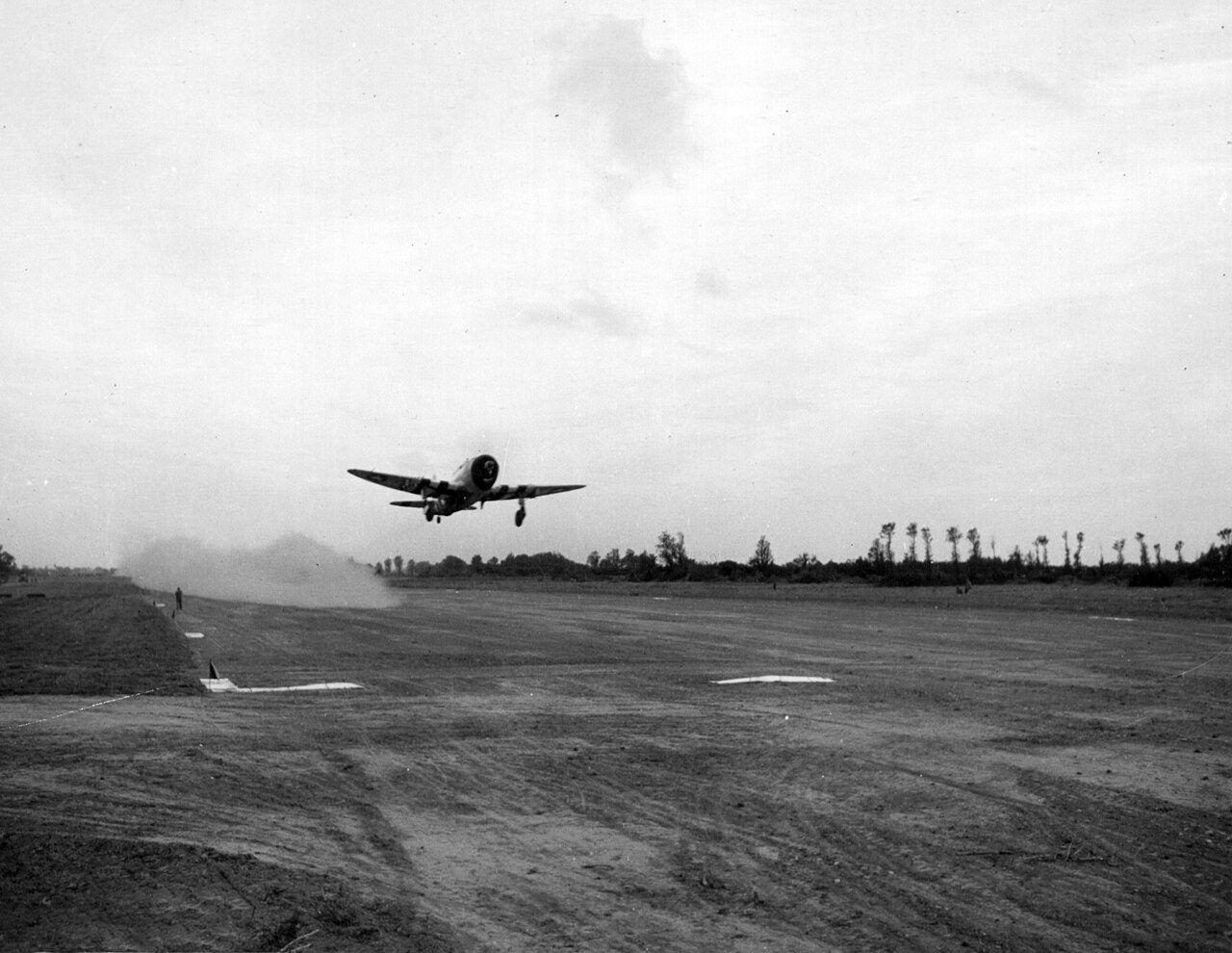
- Advanced landing grounds (ALGs): the RAF Second Tactical Air Force’s Airfield Construction Service built the British ALGs. In the American sector they were built by the 16 aviation engineer battalions of IX Engineer Command. A-1 Saint-Pierre-du-Mont was declared operational on 13 June 1944 and A-3 Cardonville on 14 June, followed by A-2 Cricqueville-en-Bessin on 19 June. Pierced steel planking reached the bridgehead in July 1944. By 15 September, US engineers had more than 80 ALGs in operation and British engineers 76. [7] Kent had ALGs of its own before the invasion, among them High Halden (AAF-411). [7]
- RAF Manston: later in the war it was home to Hawker Typhoon attack aircraft and to No. 616 Squadron, the first Meteor jet squadron, from 21 July 1944 to 21 January 1945. [2]
Germany and Central Europe
Historical significance
The Fulda Gap, two corridors of lowland between the Hesse–Thuringia stretch of the inner German border and Frankfurt, was seen throughout the Cold War as a route by which Soviet and Warsaw Pact tanks might drive in a surprise attack to seize crossings of the Rhine. [8] Its defence was the mission of the US V Corps, with armored cavalry watching the border: the 14th Armored Cavalry Regiment from 1951 to 1972 and then the 11th, whose task in war was to delay an attack until the corps’ divisions could deploy. [8] Observation Post Alpha, near Rasdorf, overlooked the gap until the army left it in 1991. [9]
In 1948–1949 the Soviet blockade of West Berlin was answered by an airlift flown from bases such as Wiesbaden and Rhein-Main. [17] From 1969 to 1993 NATO’s annual Reforger exercises practised deploying forces quickly from North America to West Germany, using military airlift, sealift and civil reserve aircraft, in case of war. [10]
Forces deployed
- US Army: V Corps held the Fulda Gap, with US forces headquartered at Frankfurt [8], and VII Corps was headquartered at Kelley Barracks in Stuttgart from 1951 until it went to the Gulf War in 1990–1991 and was inactivated in 1992. [11]
- Ramstein Air Base: built between 1951 and 1953 and today the headquarters of US Air Forces in Europe – Air Forces Africa and NATO’s Allied Air Command. [12]
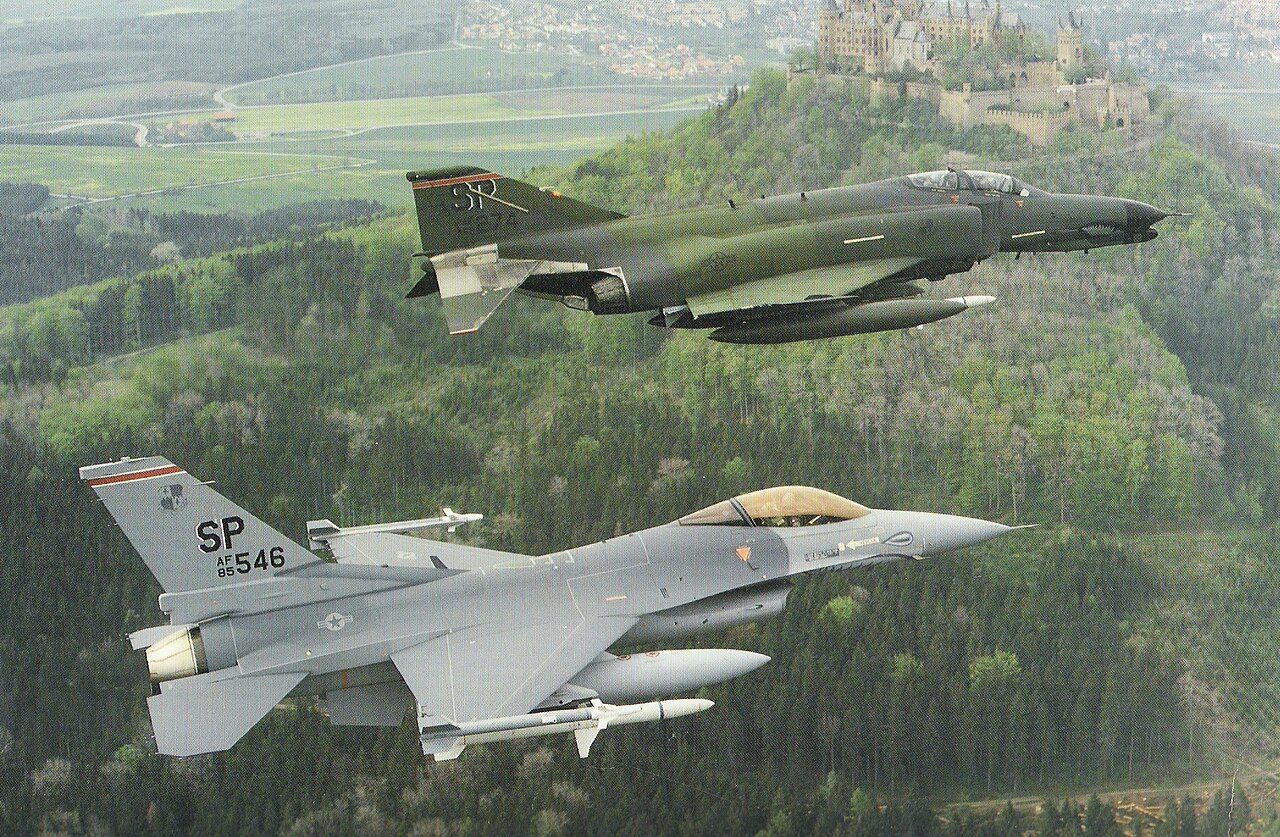
- Spangdahlem Air Base: in November 1983 its 52nd Tactical Fighter Wing became the only all-defence-suppression wing outside the United States, pairing F-4EF-4 Phantom II AircraftThe big two-seat Cold War fighter-bomber; the F-4E added an internal gun and slats after Vietnam. and F-4G Phantoms as Wild Weasel hunter-killer teams; F-16CF-16 Fighting Falcon AircraftA single-engine multirole fighter: fly-by-wire, 9 g, and the US Air Force's main strike and SEAD aircraft.s began replacing its Phantoms in 1987, while F-4Gs stayed until 1994. [13]
- Bitburg Air Base: home of the 36th Tactical Fighter Wing from 1952 until it was returned to Germany on 1 October 1994. [14]
- Hahn Air Base: home of the 50th Tactical Fighter Wing, inactivated in 1991, before the base was handed over in September 1993. [15]
- Sembach: a front-line NATO base for US reconnaissanceReconnaissance GlossaryJoint terms: A mission undertaken to obtain, by visual observation or other detection methods, information about the activities and resources of an enemy or adversary, or to secure data concerning the meteorological, hydrographic, or…, close-air-supportCAS GlossaryJoint terms: Close air support. Air action by fixed- and rotary-wing aircraft against hostile targets that are in close proximity to friendly forces and that require detailed integration of each air mission with the fire and movement… and tactical air control units during the Cold War, and a US Army post since 2012. [16]
The Balkans and the Adriatic
Historical significance
NATO fought the first combat of its history over the Balkans. Operation Deny Flight began on 12 April 1993 to enforce the UN no-fly zone over Bosnia and Herzegovina and grew to include close air supportCAS GlossaryJoint terms: Close air support. Air action by fixed- and rotary-wing aircraft against hostile targets that are in close proximity to friendly forces and that require detailed integration of each air mission with the fire and movement… for UN troops and air strikes. On 28 February 1994, USAF F-16s shot down four of six Serb J-21 Jastreb jets over Banja Luka, the first combat engagement in NATO’s history. [18] In Operation Deliberate Force, from 30 August to 20 September 1995, about 400 aircraft from 15 nations struck 338 Bosnian Serb targets with 1,026 bombs, 708 of them precision-guidedPGM GlossaryWeapons: Precision-guided munition. A guided weapon intended to destroy a point target and minimize collateral damage. Also called a smart weapon or smart munition.. [19]
From 24 March to 10 June 1999, Operation Allied Force bombed the Federal Republic of Yugoslavia over Kosovo. About 1,000 aircraft flew from bases in Italy and Germany and from carriers in the Adriatic, controlled from a NATO Combined Air Operations Centre at Vicenza, and flew over 38,000 combat missions. [20] Serbian SA-3SA-3 Goa Threat systemCommand-guided by the Low Blow radar from two- or four-missile launchers; the system that downed an F-117. batteries shot down an F-117 Nighthawk on 27 March and, on 2 May, the F-16 of Lt. Col. David Goldfein, commander of the 555th Fighter Squadron; both pilots were rescued. [20]
Forces deployed
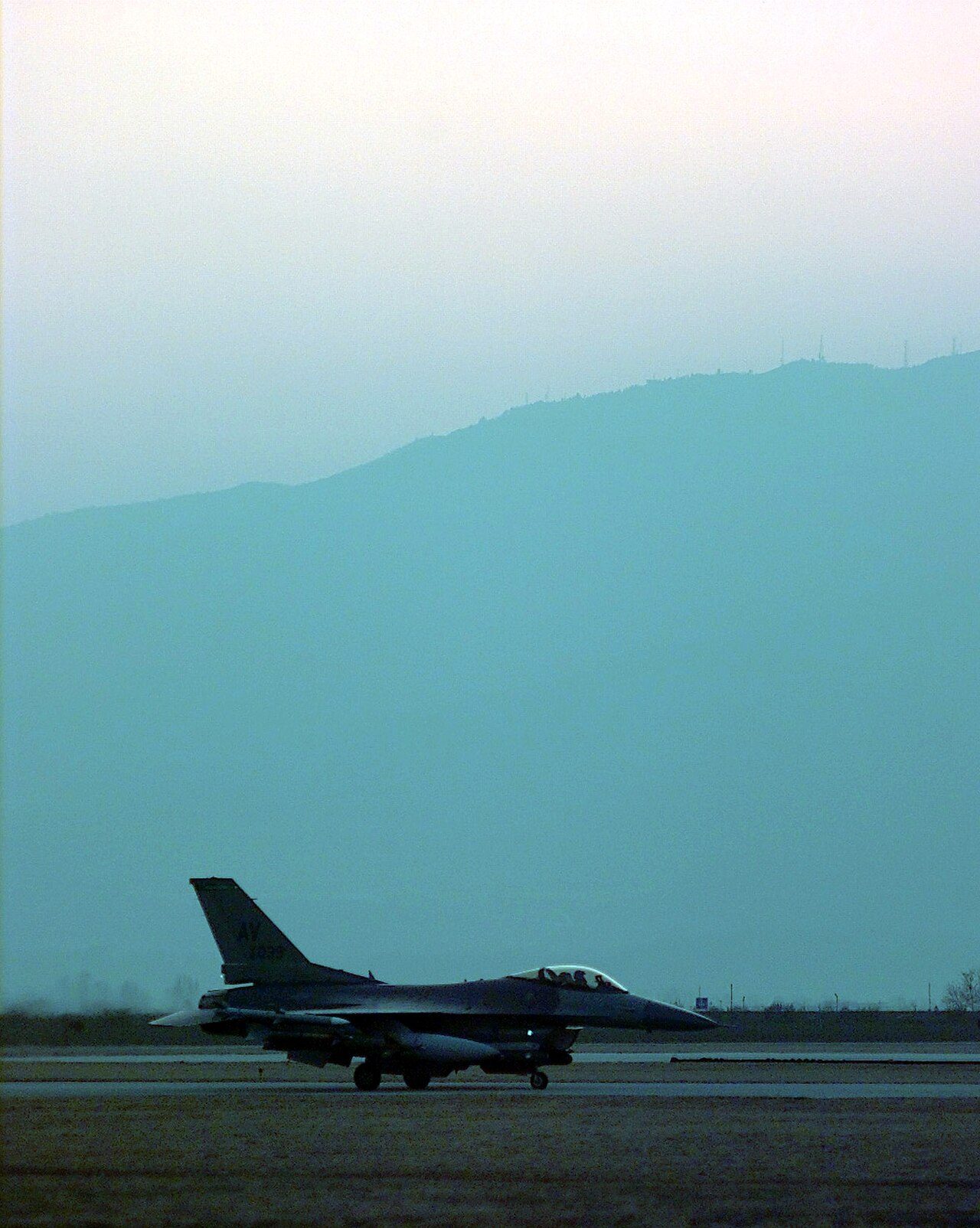
- Aviano Air Base, Italy: an Italian Air Force base that hosts the USAF’s 31st Fighter Wing, the only US fighter wing south of the Alps, with the F-16F-16 Fighting Falcon AircraftA single-engine multirole fighter: fly-by-wire, 9 g, and the US Air Force's main strike and SEAD aircraft.s of the 510th and 555th Fighter Squadrons. [21]
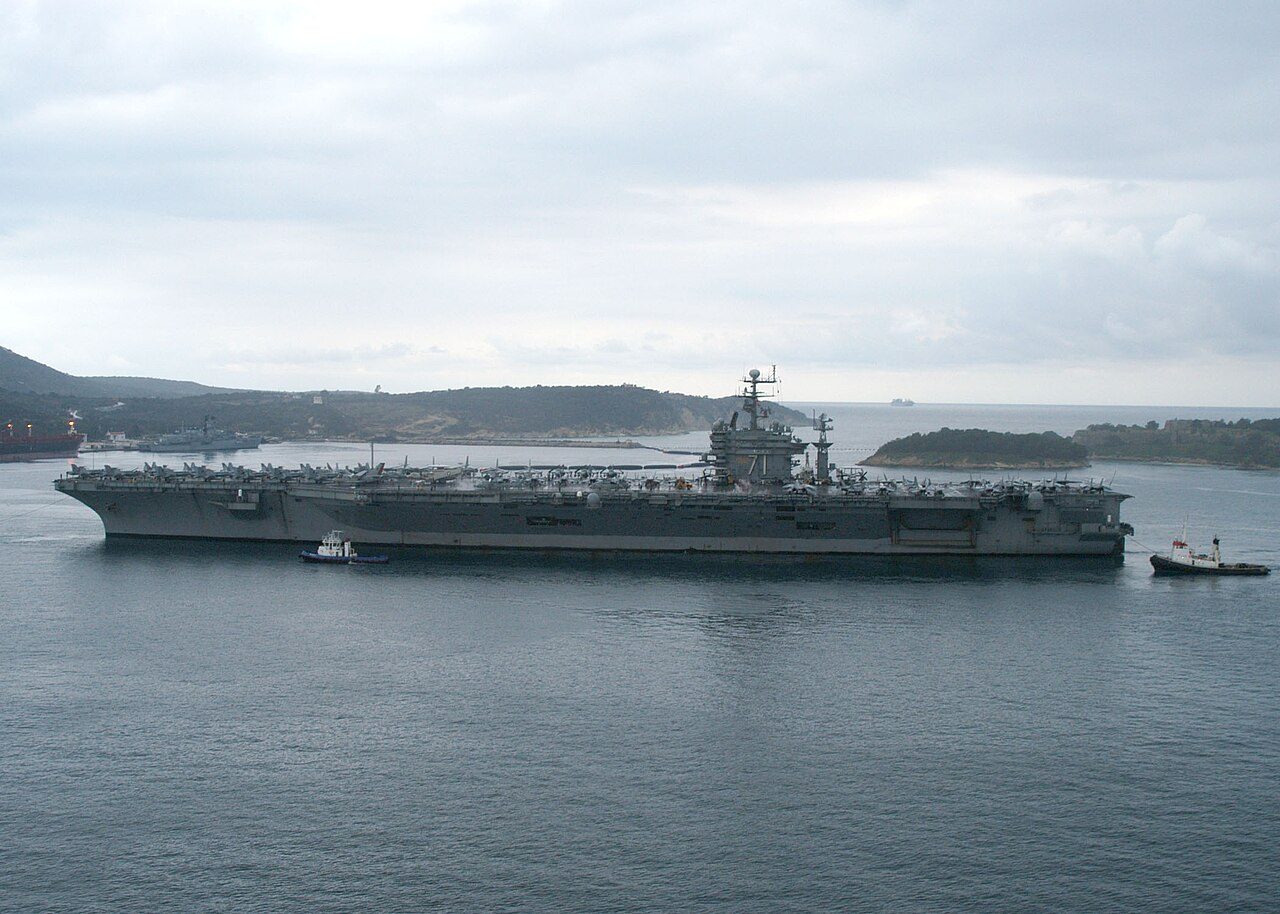
- Carriers: in 1999 the US Navy sent a task force with USS Theodore Roosevelt and an amphibious assault ship, the Royal Navy HMS Invincible with Sea Harriers, the French Navy Foch and the Italian Navy Giuseppe Garibaldi. [20]
- Albania: a battalion of US Army AH-64AH-64D Apache Longbow AircraftThe US Army's twin-engine attack helicopter, flown from Panama and Desert Storm to Afghanistan; the Longbow adds a mast-mounted radar. Apaches from the 11th Aviation Regiment deployed in 1999, and a battalion of the 82nd Airborne Division’s 505th Parachute Infantry Regiment secured Tirana airfield and the Apache refuelling sites. [20]
- Camp Bondsteel, Kosovo: the headquarters of the Kosovo Force (KFOR) and its US Army-led Regional Command-East; 52 helipads were built on its west side in August 1999. [22]
- Tuzla, Bosnia and Herzegovina: placed under the UN Protection Force in 1992, the airfield became the main hub of the NATO-led Implementation Force (IFOR) from 1996. [23]
Greece, Turkey and the Aegean
Historical significance
Since the 1970s Greece and Turkey have disputed sovereignty and rights in the Aegean Sea: territorial waters, national airspace, the role of flight information regions in controlling military flights, and the demilitarised status of some Greek islands. The dispute twice brought the two countries close to war, in 1987 and early in 1996. [24] The 1996 crisis was over the islets of Imia. [25] On 20 July 1974 Turkey invaded Cyprus; the invasion ended in the island’s partition along the UN-monitored Green Line, which still divides it. [26]
Forces deployed
- Souda Bay, Crete: the Hellenic Navy’s second-largest naval base by number of warships and NATO’s largest and most prominent in the eastern Mediterranean, with the only deep-water port in southern Europe and the Mediterranean able to take supercarriers. Known to NATO as Naval Support Activity Souda Bay, it has had the US Navy’s expeditionary mobile base USS Hershel “Woody” Williams deployed there since 2020. [27]
- Andravida Air Base, Elis: home of the Hellenic Air Force’s 117th Combat Wing and of the air force’s Air Tactics Center. The unit, a combat group since 1961, became a full combat wing in May 1969 and was chosen to receive the F-4EF-4 Phantom II AircraftThe big two-seat Cold War fighter-bomber; the F-4E added an internal gun and slats after Vietnam. Phantom. [28]
- Larissa Air Base, Thessaly: home of the Hellenic Air Force’s 110th Combat Wing; its runways have no ILS. USAF MQ-9 Reaper drones were based there temporarily from May 2018. [29]
The Kola Peninsula and the High North
Historical significance
The Kola Peninsula is the home of Russia’s Northern Fleet, which in the Soviet era operated more than 200 submarines, from diesel-electric boats to nuclear ballistic-missile submarines; from December 2014 it was the core of a joint command over all Russian forces in the Murmansk and Arkhangelsk regions and on the Arctic islands, until in March 2024 it was placed directly under the Russian Navy’s senior command. [30]
The Nordic neighbours prepared for war in their own ways. Sweden’s air force planned to disperse its squadrons across many wartime bases, including stretches of road, so that an attacker would find it hard to destroy on the ground; the Bas 90 system grew out of that idea in the 1970s and 1980s, and Israel’s destruction of the Egyptian Air Force on its airfields in 1967 was taken as validation of it. [35] Finland, neutral throughout the Cold War, joined NATO on 4 April 2023, and Sweden followed on 7 March 2024. [36] [37]
Forces deployed
- Severomorsk, on the Kola Bay north-east of Murmansk: the main naval base and main administrative base of the Northern Fleet. [31]
- Olenya, 92 km south of Murmansk: headquarters at various times of five naval reconnaissanceReconnaissance GlossaryJoint terms: A mission undertaken to obtain, by visual observation or other detection methods, information about the activities and resources of an enemy or adversary, or to secure data concerning the meteorological, hydrographic, or… air units, and by 2020 a Long-Range Aviation base whose 3,500 m runway is the longest on the peninsula. [32]
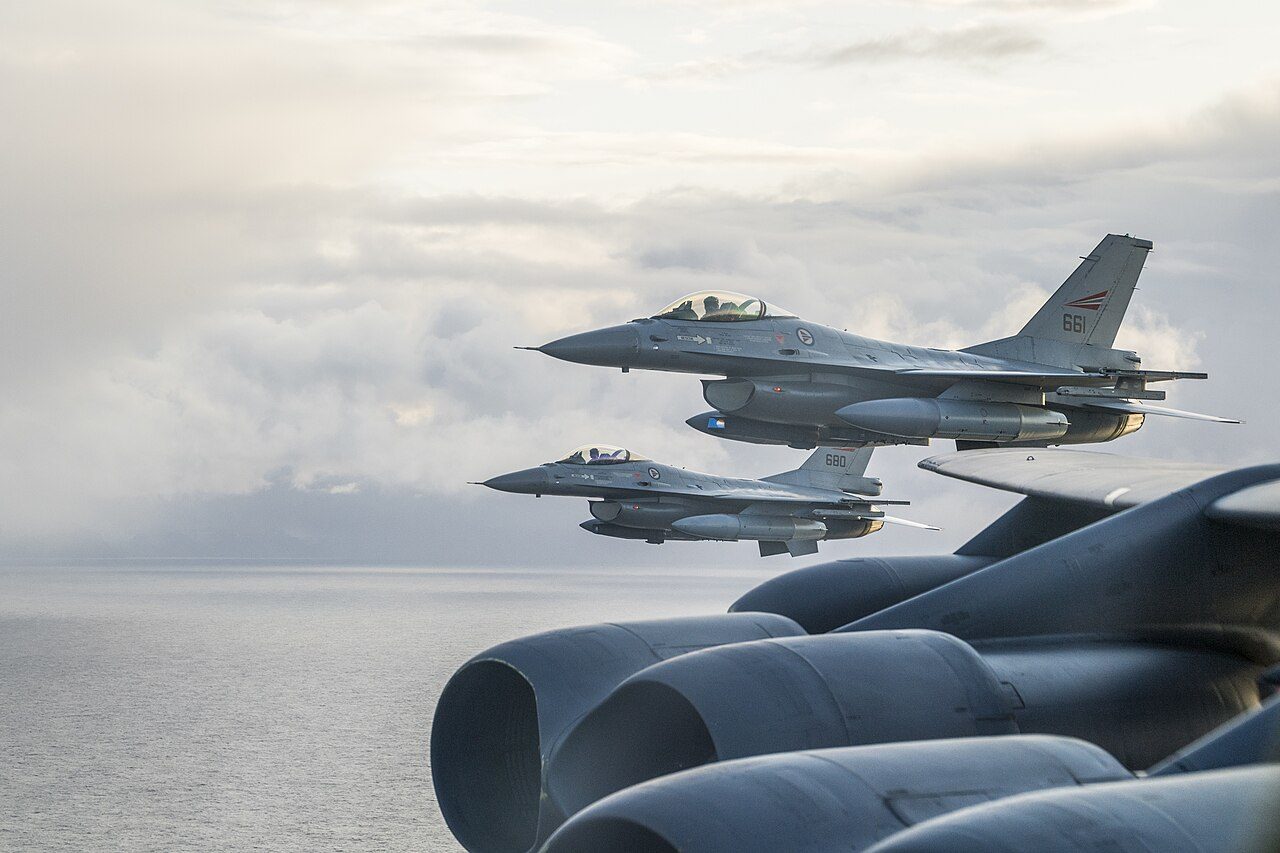
- Bodø, Norway: the main air station of northern Norway, home of NATO’s quick reaction alert until 2022, when the mission passed to F-35s at Evenes. Its F-16F-16 Fighting Falcon AircraftA single-engine multirole fighter: fly-by-wire, 9 g, and the US Air Force's main strike and SEAD aircraft. squadrons moved to Ørland in 2023; a search-and-rescueSAR GlossaryJoint terms: Search and rescue. The use of aircraft, surface craft, submarines, and specialized rescue teams and equipment to search for and rescue distressed persons on land or at sea in a permissive environment. detachment remains. [33]
- Andøya, Norway: base of the Norwegian P-3C Orions until 30 June 2023, when 333 Squadron moved to Evenes; a 2022 defence white paper planned it as a permanent reception base for allied forces. [34]




Sources
- Battle of Britain. Wikipedia (secondary source). https://en.wikipedia.org/wiki/Battle_of_Britain (accessed 2026-10-28).
- RAF Manston. Wikipedia (secondary source). https://en.wikipedia.org/wiki/RAF_Manston (accessed 2026-10-28).
- Operation Overlord. Wikipedia (secondary source). https://en.wikipedia.org/wiki/Operation_Overlord (accessed 2026-10-28).
- Operation Cobra. Wikipedia (secondary source). https://en.wikipedia.org/wiki/Operation_Cobra (accessed 2026-10-28).
- Falaise pocket. Wikipedia (secondary source). https://en.wikipedia.org/wiki/Falaise_pocket (accessed 2026-10-28).
- Ninth Air Force. Wikipedia (secondary source). https://en.wikipedia.org/wiki/Ninth_Air_Force (accessed 2026-10-28).
- Advanced Landing Ground. Wikipedia (secondary source). https://en.wikipedia.org/wiki/Advanced_Landing_Ground (accessed 2026-10-28).
- Fulda Gap. Wikipedia (secondary source). https://en.wikipedia.org/wiki/Fulda_Gap (accessed 2026-10-27).
- Observation Post Alpha. Wikipedia (secondary source). https://en.wikipedia.org/wiki/Observation_Post_Alpha (accessed 2026-10-27).
- Exercise Reforger. Wikipedia (secondary source). https://en.wikipedia.org/wiki/Exercise_Reforger (accessed 2026-10-27).
- VII Corps (United States). Wikipedia (secondary source). https://en.wikipedia.org/wiki/VII_Corps_(United_States) (accessed 2026-10-27).
- Ramstein Air Base. Wikipedia (secondary source). https://en.wikipedia.org/wiki/Ramstein_Air_Base (accessed 2026-10-27).
- Spangdahlem Air Base. Wikipedia (secondary source). https://en.wikipedia.org/wiki/Spangdahlem_Air_Base (accessed 2026-10-27).
- Bitburg Airport. Wikipedia (secondary source). https://en.wikipedia.org/wiki/Bitburg_Airport (accessed 2026-10-27).
- Hahn Air Base. Wikipedia (secondary source). https://en.wikipedia.org/wiki/Hahn_Air_Base (accessed 2026-10-27).
- Sembach Kaserne. Wikipedia (secondary source). https://en.wikipedia.org/wiki/Sembach_Kaserne (accessed 2026-10-27).
- Berlin Blockade. Wikipedia (secondary source). https://en.wikipedia.org/wiki/Berlin_Blockade (accessed 2026-10-28).
- Operation Deny Flight. Wikipedia (secondary source). https://en.wikipedia.org/wiki/Operation_Deny_Flight (accessed 2026-10-28).
- Operation Deliberate Force. Wikipedia (secondary source). https://en.wikipedia.org/wiki/Operation_Deliberate_Force (accessed 2026-10-28).
- NATO bombing of Yugoslavia. Wikipedia (secondary source). https://en.wikipedia.org/wiki/NATO_bombing_of_Yugoslavia (accessed 2026-10-28).
- Aviano Air Base. Wikipedia (secondary source). https://en.wikipedia.org/wiki/Aviano_Air_Base (accessed 2026-10-28).
- Camp Bondsteel. Wikipedia (secondary source). https://en.wikipedia.org/wiki/Camp_Bondsteel (accessed 2026-10-28).
- Tuzla International Airport. Wikipedia (secondary source). https://en.wikipedia.org/wiki/Tuzla_International_Airport (accessed 2026-10-28).
- Aegean dispute. Wikipedia (secondary source). https://en.wikipedia.org/wiki/Aegean_dispute (accessed 2026-10-28).
- Imia crisis. Wikipedia (secondary source). https://en.wikipedia.org/wiki/Imia_crisis (accessed 2026-10-28).
- Turkish invasion of Cyprus. Wikipedia (secondary source). https://en.wikipedia.org/wiki/Turkish_invasion_of_Cyprus (accessed 2026-10-28).
- Naval Support Activity Souda Bay. Wikipedia (secondary source). https://en.wikipedia.org/wiki/Naval_Support_Activity_Souda_Bay (accessed 2026-10-28).
- Andravida Air Base. Wikipedia (secondary source). https://en.wikipedia.org/wiki/Andravida_Air_Base (accessed 2026-10-28).
- Larissa Air Base. Wikipedia (secondary source). https://en.wikipedia.org/wiki/Larissa_Air_Base (accessed 2026-10-28).
- Northern Fleet. Wikipedia (secondary source). https://en.wikipedia.org/wiki/Northern_Fleet (accessed 2026-10-27).
- Severomorsk. Wikipedia (secondary source). https://en.wikipedia.org/wiki/Severomorsk (accessed 2026-10-27).
- Olenya airbase. Wikipedia (secondary source). https://en.wikipedia.org/wiki/Olenya_airbase (accessed 2026-10-27).
- Bodø Air Station. Wikipedia (secondary source). https://en.wikipedia.org/wiki/Bod%C3%B8_Main_Air_Station (accessed 2026-10-27).
- Andøya Air Station. Wikipedia (secondary source). https://en.wikipedia.org/wiki/And%C3%B8ya_Air_Station (accessed 2026-10-27).
- Bas 90. Wikipedia (secondary source). https://en.wikipedia.org/wiki/Bas_90 (accessed 2026-10-27).
- Finland–NATO relations. Wikipedia (secondary source). https://en.wikipedia.org/wiki/Finland%E2%80%93NATO_relations (accessed 2026-10-27).
- Sweden–NATO relations. Wikipedia (secondary source). https://en.wikipedia.org/wiki/Sweden%E2%80%93NATO_relations (accessed 2026-10-27).
Wikipedia articles are secondary sources and can change; they are cited with the date they were read.