Drafted — not technically validated
Record revision 1 · Command-guided by the Low Blow radar from two- or four-missile launchers; the system that downed an F-117.
Real-world system as described in public sources. Figures vary between variants and sources, so differences are shown beside the number they affect. Simulator implementations may differ.
SA-3 Goa · S-125 Neva/Pechora
- Role
- Short-range SAM system [1]
- In service
- 1961 [1]
- Guidance
- Radio command guidance, like the S-75 [1]
- Range
- 2.5 km (1.3 NM)–22 km (11.9 NM) [1]
- Altitude
- 20 m (70 ft)–14,000 m (45,900 ft) [1]
- Mobility and deployment
- Fixed turrets; missiles can also be carried ready to fire in pairs on trucks [1]
- Radars
- SNR-125 “Low Blow” (I/D band): Tracking, fire control and guidance; 40 km, 80 km in a second mode
- P-15 “Flat Face” (C band): Target acquisition, 250 km
- P-15M(2) “Squat Eye” (C band): Target acquisition (P-15 variant)
- PRV-11 “Side Net”: Height finder
- RWR symbol
- 3SA-3 Goa Low Blow track radar (S-125) FFSA-2, SA-3 and SA-5 Flat Face search radar (S-125 P-19) [2]
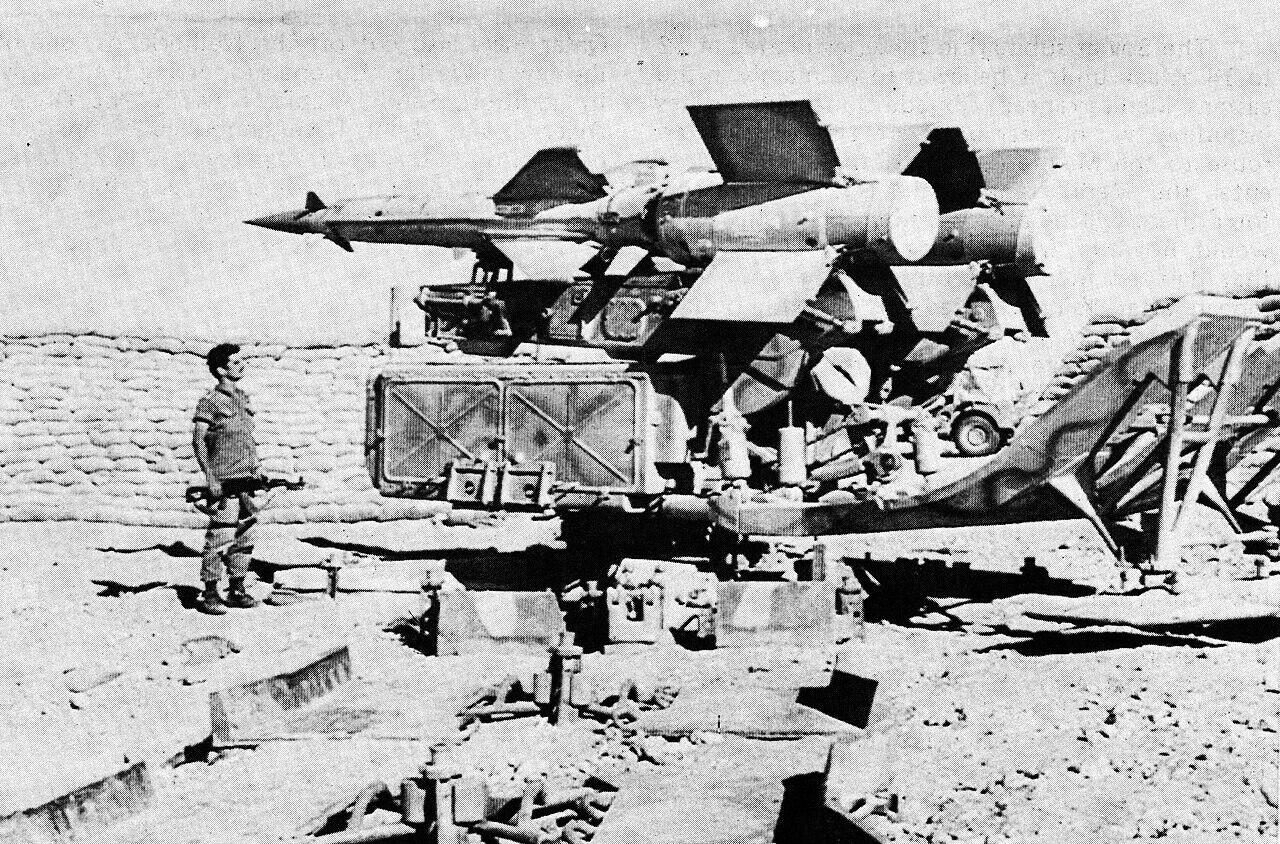

Figure 1 — SA-3 Goa engagement limits (side view)
V-601 (5V27) missile, figures the S-125 article attributes to other sources: 2.5–22 km range, 20 m–14 km altitude [1]. The shaded region combines the published minimum and maximum range, treated as slant range from the launcher, with the minimum and maximum altitude. Real launch zones are smaller and change with target speed, aspect and altitude. Dashed edges mark limits the cited sources do not give. Other SAMs in this section are drawn faintly for comparison, labelled by SA number. Each scale prints its vertical exaggeration.
Overview
The S-125 Neva/Pechora, NATO reporting name SA-3 Goa, is a Soviet SAM system in service since 1961. [1]
The site
Missiles are typically deployed on fixed turrets holding two or four, but can also be carried ready to fire in pairs on ZIL trucks. [1] Figure 3 shows both turret types; the cited text does not give the number of launchers per battery. The SNR-125 Low Blow radar tracks the target and guides the missiles: a 250 kW I/D-band radar with a 40 km range, or 80 km in a second mode. Targets are acquired by the 380 kW C-band P-15 Flat Face (250 km) or its P-15M(2) Squat Eye variant, with a PRV-11 Side Net height finder. [1]
How it engages
Like the S-75SA-2 Guideline Threat systemThe classic six-launcher site around a Fan Song radar: radio-command-guided, and the SAM US crews met over North Vietnam., the S-125 uses radio command guidance. [1] The first missile, the V-600 (5V24), reaches about MachMach number GlossaryFlight: The ratio of the true airspeed to the speed of sound. All compressibility effects depend on it. 3 to 3.5, has a range of about 15 km and carries a 60 kg high-explosive warhead. The later V-601 (5V27) carries a 70 kg warhead. [1]
Envelope
Published V-601 figures vary. The S-125 article gives intercept altitudes of 100 m to 18 km and a range of 3.5 to 35 km with the Pechora-2A upgrade, and notes that other sources give 2.5 to 22 km and 20 m to 14 km. [1] Figure 1 uses the second, smaller set: 1.3–11.9 NM and 70 to 45,900 ft.
On the radar warning receiver
In the DCS F-14F-14 Tomcat AircraftThe Navy's swing-wing fleet defence fighter: two crew, AWG-9 radar and AIM-54 Phoenix., the AN/ALR-67 shows the Low Blow track radar as 3 and the Flat Face search radar as FF; the table identifies that radar as the P-19 used with the S-125. [2] A Flat Face alone does not tell you which of the SA-2SA-2 Guideline Threat systemThe classic six-launcher site around a Fan Song radar: radio-command-guided, and the SAM US crews met over North Vietnam., SA-3 or SA-5SA-5 Gammon Threat systemA very long-range strategic SAM guided by the Square Pair continuous-wave radar. it is working with.
History
An S-125 shot down a USAF F-16F-16 Fighting Falcon AircraftA single-engine multirole fighter: fly-by-wire, 9 g, and the US Air Force's main strike and SEAD aircraft. south of Baghdad on 19 January 1991. On 27 March 1999, during the Kosovo War, a Yugoslav S-125 battery shot down an F-117 Nighthawk, the only recorded downing of a stealth aircraft. [1]
Figure 2 — SA-3 Goa on a radar warning receiver
- 3
- SA-3 Goa Low Blow track radar (S-125)
- FF
- SA-2, SA-3 and SA-5 Flat Face search radar (S-125 P-19)
Layout after the DCS F-14 AN/ALR-67 description [2]: the inner band shows emitters that cannot engage you, the middle band systems within lethal range, and the outer band imminent threats; a symbol flashes when its radar is engaging. Search radars are drawn in the inner band and track radars in the middle band. Bearings are arbitrary. Other aircraft and RWRs use different symbols.
Figure 3 — SA-3 Goa unit composition
Schematic symbols for each element, drawn from the composition given in [1]; not vehicle outlines and not to scale.
Sources
- S-125 Neva/Pechora. Wikipedia (secondary source). https://en.wikipedia.org/wiki/S-125_Neva/Pechora (accessed 2026-10-25).
- DCS: F-14 Tomcat manual, AN/ALR-67 radar warning receiver. Heatblur Simulations. https://f14.manuals.heatblur.se/f14ab/systems/defensive_systems/rwr/alr_67.html (accessed 2026-10-25).
Wikipedia articles are secondary sources and can change; they are cited with the date they were read. The Heatblur manual describes the DCS F-14's AN/ALR-67, not every aircraft's radar warning receiver.