Drafted — not technically validated
Record revision 1 · A long-range, vertically launched SAM: Flap Lid fire control, Clam Shell low-altitude and Big Bird search radars.
Real-world system as described in public sources. Figures vary between variants and sources, so differences are shown beside the number they affect. Simulator implementations may differ.
SA-10 Grumble · S-300P family (S-300PT, S-300PS, S-300PMU)
- Role
- Long-range air defence system [1]
- In service
- S-300P tests completed 1978; S-300PS (SA-10B) introduced 1985 [1]
- Guidance
- Command guidance; the 5V55R missile adds terminal semi-active radar homing [1]
- Range
- 5 km (2.7 NM)–90 km (48.6 NM) [1]
- Altitude
- 25 m (80 ft)–27,000 m (88,600 ft) [1]
- Mobility and deployment
- S-300PT semi-mobile, about an hour to set up; S-300PS on MAZ-7910 8×8 trucks [1]
- Radars
- 30N6 “Flap Lid” (I/J band): Tracking and engagement; the 30N6 Flap Lid A tracks up to 24 targets and guides up to four missiles at four targets
- 76N6 / 5N66M “Clam Shell” (I band): Low-altitude detection on a 24–39 m mast; 90 km against a target 500 m above the ground
- 36D6 “Tin Shield” (E/F band): Surveillance, 180–360 km
- 64N6 “Big Bird”: Regiment search radar, 300 km
- RWR symbol
- 10SA-10 Grumble Flap Lid track radar (S-300PS 30N6) BBSA-10 Grumble Big Bird search radar (S-300PS 64H6E) CSSA-10 Grumble Clam Shell search radar (S-300PS 5N66M) [3]
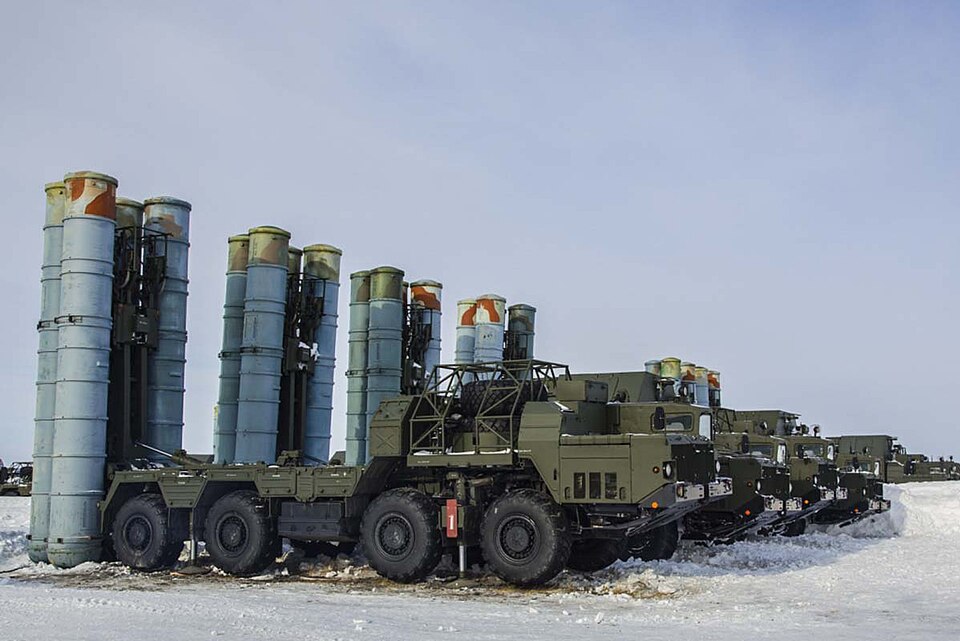

Figure 1 — SA-10 Grumble engagement limits (side view)
S-300PMU (SA-10C): 5–90 km range, 25 m–27 km altitude [1]. The S-300PS (SA-10B) 5V55R reaches 75 km [1]. The shaded region combines the published minimum and maximum range, treated as slant range from the launcher, with the minimum and maximum altitude. Real launch zones are smaller and change with target speed, aspect and altitude. Dashed edges mark limits the cited sources do not give. Other SAMs in this section are drawn faintly for comparison, labelled by SA number. Each scale prints its vertical exaggeration.
Overview
The S-300, NATO reporting name SA-10 Grumble, is a family of long-range surface-to-air missile systems built by NPO Almaz for the Soviet Air Defence Forces against air raids and cruise missiles. The P suffix stands for PVO-Strany, country air defenceAir defense GlossaryJoint terms: Defensive measures designed to destroy attacking enemy aircraft or missiles in the atmosphere, or to nullify or reduce the effectiveness of such attack.. [1] This record covers the early land-based S-300P versions that carry the SA-10 name:
- S-300P / S-300PT (SA-10A): the original, semi-mobile version. More than 80 systems were active in 1987, mainly around Moscow.
- S-300PS / S-300PM (SA-10B): introduced in 1985 with truck-mounted launchers, radar and command post, and the 5V55R missile.
- S-300PMU (SA-10C): the export version, completed in 1985. [1]
The later S-300PMU-1 and PMU-2 are SA-20 Gargoyle, the naval S-300F is SA-N-6, and the army S-300V is a different design, SA-12SA-12 Gladiator / Giant Threat systemThe army's tracked long-range system, with separate missiles against aircraft (Gladiator) and ballistic missiles (Giant).. [1]
The battery
An S-300PT unit has a 36D6 Tin Shield surveillance radar, a 30N6 Flap Lid fire-control radar and 5P85-1 semi-trailer launchers, usually with a 76N6 Clam Shell low-altitude radar as well. The original S-300P paired the 5N66M Clam Shell continuous-wave acquisition radar with the 30N6 Flap Lid A I/J-band phased-array tracking and engagement radar, plus a command trailer and up to twelve launchers with four missiles each. The S-300PS is similar, with an upgraded 30N6 that includes the command post, and truck-mounted launchers. A regiment typically has three batteries, with the 64N6 Big Bird as its search radar. [1]
The Clam Shell sits on a mast 24–39 m tall and detects a target 500 m above the ground at 90 km. [1]
How it engages
The missiles are launched vertically, so they can engage in any direction without turning the launcher; they are catapulted clear of the tube before the motor fires, then tip over towards the target. Early versions are guided by the 30N6 Flap Lid using command guidance with terminal semi-active radar homingHoming GlossaryNavigation: Flying to a station by keeping the bearing pointer at the top of the instrument without correcting for wind. In a crosswind it flies a curved path.Weapons: The technique whereby a mobile station directs itself, or is directed, towards a source of primary or reflected energy, or to a specified point.. [1] The original design was meant to use track-via-missile guidance, but that could not track targets below 500 m, so attacking SEADSEAD GlossaryJoint terms: Suppression of enemy air defenses. Activity that neutralizes, destroys, or temporarily degrades surface-based enemy air defenses by destructive and/or disruptive means. aircraft could hide in the terrain. Command guidance for the first part of the flight was added, which brought the minimum engagement altitude down to 25 m. [1]
The 5V55K missile has a range of 47 km on command guidance. The 5V55R (1981) reaches 75 km, flies at up to 2,000 m/s and carries a 130 kg warhead with proximity and contact fuzesFuze GlossaryWeapons: A device that causes the detonation of an explosive charge at the proper time after certain conditions are met. A bomb fuze is mechanical or electrical, and is classed by what sets it off (impact, mechanical time…. [1]
Envelope
The S-300PMU (SA-10C) engages aircraft at 5–90 km (2.7–49 NM) and from 25 m to 27 km (82 to 89,000 ft); its 5V55K reaches 45–47 km and its 5V55R 75–90 km. The S-300PS’s 5V55R raised the maximum to 75 km. [1] Figure 1 uses the S-300PMU figures, the largest the source gives for an SA-10 version, so it is not the envelope of every SA-10 site.
On the radar warning receiver
In the DCS F-14F-14 Tomcat AircraftThe Navy's swing-wing fleet defence fighter: two crew, AWG-9 radar and AIM-54 Phoenix., the AN/ALR-67 shows the Flap Lid track radar as 10, the Big Bird search radar as BB and the Clam Shell search radar as CS. [3]
History
The S-300’s first use in war was the 2020 Nagorno-Karabakh conflict, where both sides listed it. Ukraine had around 100 active batteries when Russia invaded in February 2022, and Slovakia transferred its only battery to Ukraine in April 2022. Ukrainian officials reported in 2022 that Russia was firing S-300 missiles at ground targets. [1] Iran’s last three S-300 batteries were disabled by Israeli F-35s in October 2024. [1]
Figure 2 — SA-10 Grumble on a radar warning receiver
- 10
- SA-10 Grumble Flap Lid track radar (S-300PS 30N6)
- BB
- SA-10 Grumble Big Bird search radar (S-300PS 64H6E)
- CS
- SA-10 Grumble Clam Shell search radar (S-300PS 5N66M)
Layout after the DCS F-14 AN/ALR-67 description [3]: the inner band shows emitters that cannot engage you, the middle band systems within lethal range, and the outer band imminent threats; a symbol flashes when its radar is engaging. Search radars are drawn in the inner band and track radars in the middle band. Bearings are arbitrary. Other aircraft and RWRs use different symbols.
Figure 3 — SA-10 Grumble unit composition
Schematic symbols for each element, drawn from the composition given in [1]; not vehicle outlines and not to scale.
Sources
- S-300 missile system. Wikipedia (secondary source). https://en.wikipedia.org/wiki/S-300_missile_system (accessed 2026-10-27).
- DCS: F-14 Tomcat manual, AN/ALR-67 radar warning receiver. Heatblur Simulations. https://f14.manuals.heatblur.se/f14ab/systems/defensive_systems/rwr/alr_67.html (accessed 2026-10-27).
Wikipedia articles are secondary sources and can change; they are cited with the date they were read. The Heatblur manual describes the DCS F-14's AN/ALR-67, not every aircraft's radar warning receiver.