Drafted — not technically validated
Record revision 1 · A shoulder-fired missile with a cooled infrared seeker: harder to decoy than the SA-7, with limited head-on capability.
Real-world system as described in public sources. Figures vary between variants and sources, so differences are shown beside the number they affect. Simulator implementations may differ.
SA-14 Gremlin · 9K34 Strela-3
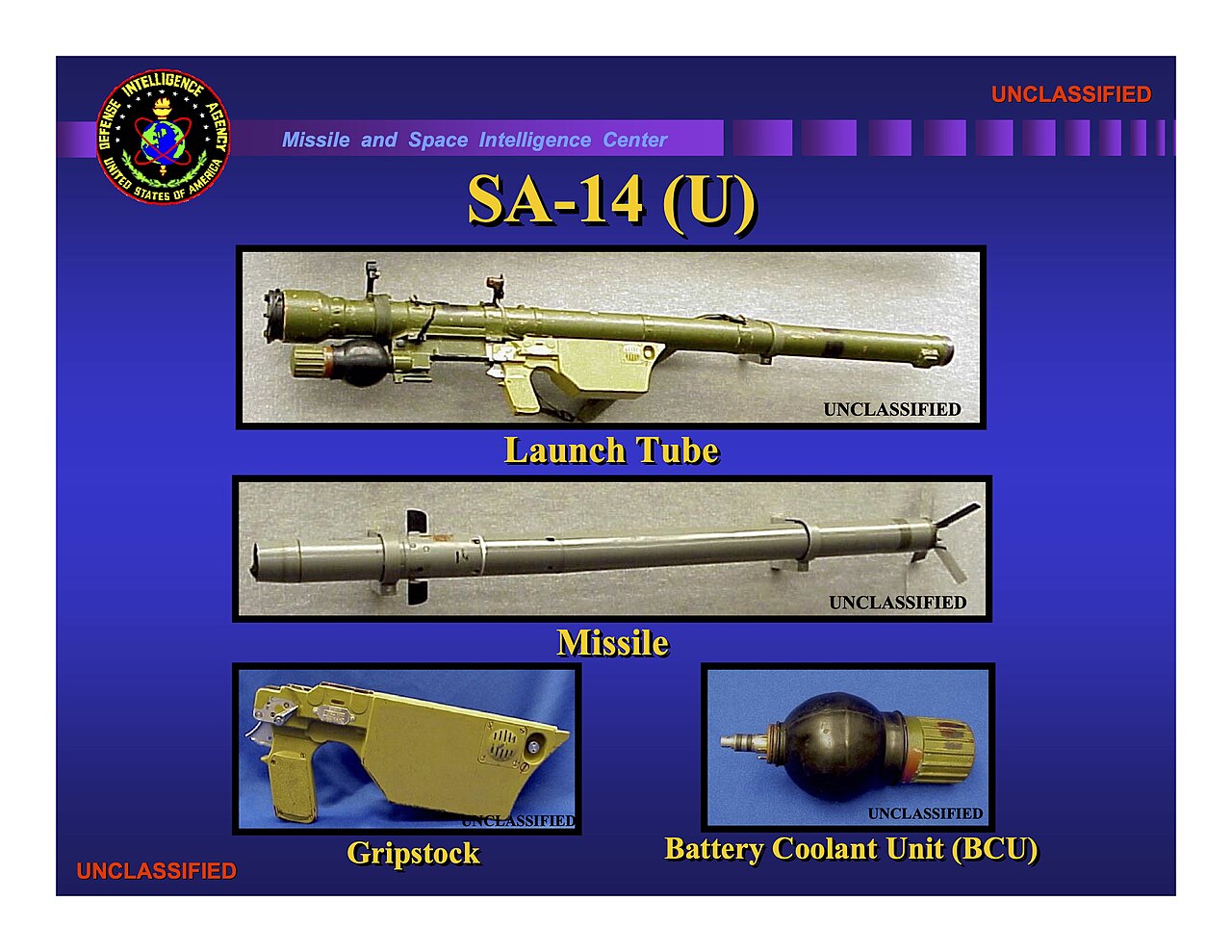

Figure 1 — SA-14 Gremlin engagement limits (side view)
4.5 km maximum range, 30–3,000 m altitude [1]; the 1998 Army handout gives 6 km and a 0 m minimum [2]. The shaded region combines the published minimum and maximum range, treated as slant range from the launcher, with the minimum and maximum altitude. Real launch zones are smaller and change with target speed, aspect and altitude. Dashed edges mark limits the cited sources do not give. Other SAMs in this section are drawn faintly for comparison, labelled by SA number. Each scale prints its vertical exaggeration.
Overview
The 9K34 Strela-3, NATO reporting name SA-14 Gremlin, was developed to replace the poorly performing 9K32 Strela-2 (SA-7SA-7 Grail Threat systemA shoulder-fired, rear-aspect infrared missile: nothing on the RWR, and flares proved highly effective against it.). It borrows heavily from the Strela-2SA-7 Grail Threat systemA shoulder-fired, rear-aspect infrared missile: nothing on the RWR, and flares proved highly effective against it. and was accepted into Soviet Army service in January 1974. It has been exported to more than 30 countries and was followed by the Igla (SA-16SA-16 Gimlet Threat systemThe simplified first Igla: a shoulder-fired infrared missile with optional IFF, credited with Gulf War and Kosovo hits. and SA-18SA-18 Grouse Threat systemThe full Igla: a shoulder-fired missile whose infrared and ultraviolet seeker resists flares, with head-on capability.). [1]
How it engages
The big change from the SA-7 is the seeker. It uses FM (con-scan) modulation, which is harder to jamElectromagnetic jamming GlossaryJoint terms: The deliberate radiation, reradiation, or reflection of electromagnetic energy for the purpose of preventing or reducing an enemy's effective use of the electromagnetic spectrum, and with the intent of degrading or… or decoyDecoy GlossaryWeapons: An imitation in any sense of a person, object, or phenomenon which is intended to deceive enemy surveillance devices or mislead enemy evaluation. with flaresDecoy flare GlossaryWeapons: A flare dispensed from a launcher on the aircraft and fired during evasion tactics when the aircraft is threatened by enemy heat-seeking missiles. than the SA-7’s AM spin-scan seeker. A pressurised nitrogen bottle on the launcher cools its lead sulphide detector, which then senses longer wavelengths (up to about 4.3 µm instead of 2.8 µm), so it tracks cooler targets at longer range. That gives it a limited forward-hemisphere capability against jets in favourable conditions. [1] The 1998 Army handout lists passive, cooled infrared guidance and all-aspect capability. [2]
The missile weighs 10.3 kg, flies at 470 m/s and carries a 1.17 kg blast-fragmentation warhead. [1]
Envelope
The article gives a 4.5 km (2.4 NM) maximum range and a 30–3,000 m (100–9,800 ft) engagement altitude; its summary lists a ceiling of 1,800 m against jets and 3,000 m against slow targets. [1] The 1998 Army handout gives a 6 km range and a 0 m minimum engagement altitude. [2] Neither source gives a minimum range, so Figure 1 draws 4.5 km and 30–3,000 m with the inner edge dashed.
On the radar warning receiver
The SA-14 has no radar, so a radar warning receiver gives no warning of it.
History
In the War in Abkhazia, a Georgian SA-14 shot down a Russian Mi-8Mi-8MTV-2 Hip AircraftThe armed transport version of the Mi-8, the most-produced helicopter in the world. carrying refugees on 14 December 1992, and an SA-14 shot down a Georgian Air Force Su-25Su-25 Frogfoot AircraftAn armoured Soviet close air support jet; the Su-25T adds Vikhr anti-tank missiles. on 4 July 1993. [1] Northern Alliance SA-14s are credited with eight Taliban MiG-21MiG-21 AircraftThe small delta-wing Mach 2 fighter: the most-produced supersonic jet in history. and Su-22 fighters in 2000. In Iraq, a Strela-3 hit an Airbus A300 cargo aircraft after take-off from Baghdad in November 2003, which landed despite losing hydraulic power, and one shot down a Royal Navy Lynx over Basra in May 2006. [1] The Strela-3 article attributes the loss of a British Sea Harrier over Bosnia on 16 April 1994 to an SA-14 [1]; the Igla article credits the same loss to an Igla (see SA-18SA-18 Grouse Threat systemThe full Igla: a shoulder-fired missile whose infrared and ultraviolet seeker resists flares, with head-on capability.).
Figure 2 — SA-14 Gremlin on a radar warning receiver
No symbol. It homes passively on infrared and has no radar, so a radar warning receiver has nothing to detect.
Figure 3 — SA-14 Gremlin unit composition
Schematic symbols for each element, drawn from the composition given in [1]; not vehicle outlines and not to scale.
Sources
- 9K34 Strela-3. Wikipedia (secondary source). https://en.wikipedia.org/wiki/9K34_Strela-3 (accessed 2026-10-27).
- Heavy/Light Opposing Forces Organization and Equipment (student handout, file 4G 3017-6). US Army Aviation Center, Fort Rucker, January 1998. https://man.fas.org/dod-101/sys/land/row/avoac-opfor-sh.htm (accessed 2026-10-27).
Wikipedia articles are secondary sources and can change; they are cited with the date they were read. The Heatblur manual describes the DCS F-14's AN/ALR-67, not every aircraft's radar warning receiver.