Drafted — not technically validated
Record revision 1 · A tracked, self-contained vehicle with its own Scrum Half radars and eight vertically launched command-guided missiles.
Real-world system as described in public sources. Figures vary between variants and sources, so differences are shown beside the number they affect. Simulator implementations may differ.
SA-15 Gauntlet · 9K330 Tor / 9K331 Tor-M1
- Role
- Self-contained short-range SAM vehicle [1]
- In service
- Tor accepted 19 March 1986; Tor-M1 1991 [1]
- Guidance
- Radio command guidance [1]
- Range
- 1.5 km (0.8 NM)–12 km (6.5 NM) [1]
- Altitude
- 10 m (30 ft)–6,000 m (19,700 ft) [1]
- Mobility and deployment
- Tracked GM-569 vehicle carrying its own radars and eight missiles [1]
- Radars
- Acquisition radar “Scrum Half” (F band): On the vehicle: 3D pulse-Doppler search, 25 km; detects 48 targets and tracks ten; IFF
- Engagement radar “Scrum Half” (G/H (later K) band): On the vehicle: phased-array tracking and guidance, 20 km
- RWR symbol
- 15SA-15 Gauntlet Scrum Half search and track radar (Tor 9A331) [3]
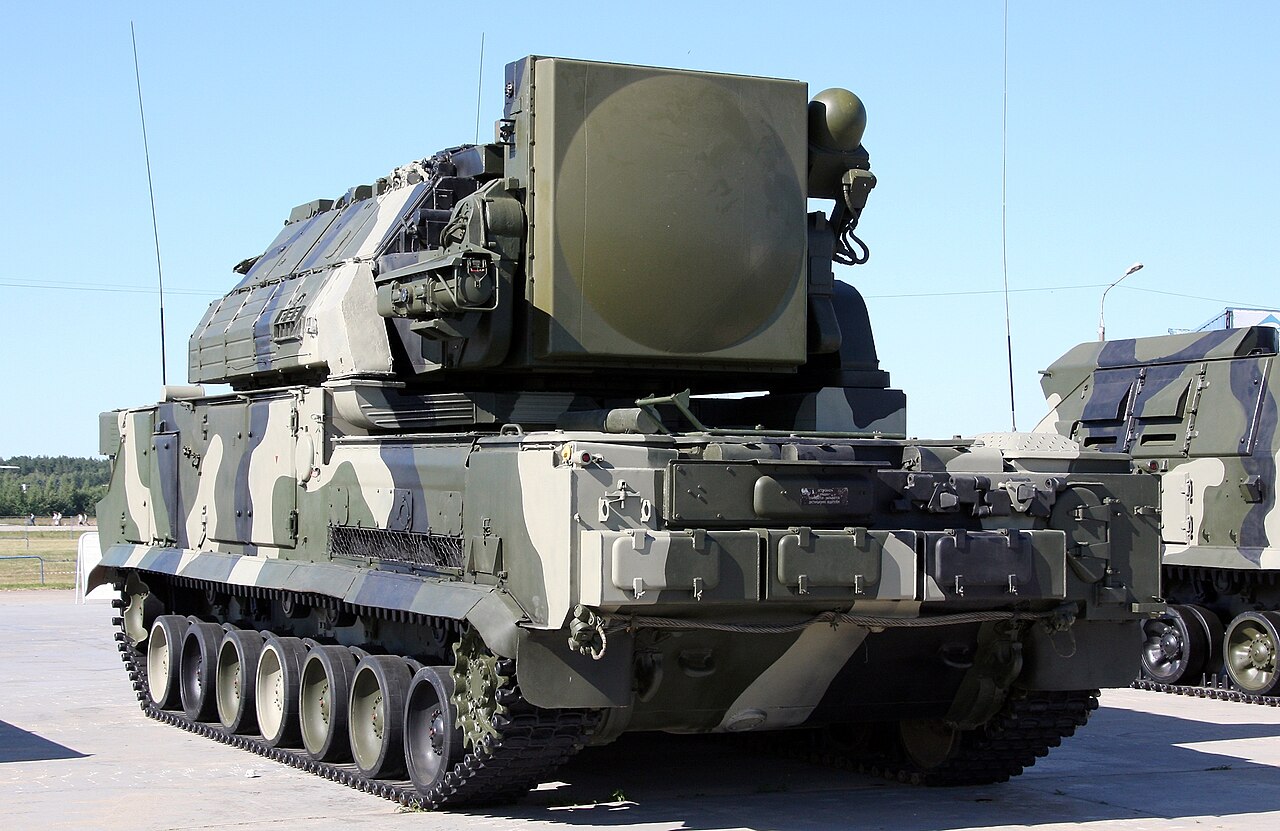

Figure 1 — SA-15 Gauntlet engagement limits (side view)
Tor-M1 (9M331): 1.5–12 km range, 10–6,000 m altitude [1]. The shaded region combines the published minimum and maximum range, treated as slant range from the launcher, with the minimum and maximum altitude. Real launch zones are smaller and change with target speed, aspect and altitude. Dashed edges mark limits the cited sources do not give. Other SAMs in this section are drawn faintly for comparison, labelled by SA number. Each scale prints its vertical exaggeration.
Overview
The Tor, NATO reporting name SA-15 Gauntlet, is an all-weather, low-to-medium-altitude, short-range SAM against aircraft, helicopters, cruise missiles, drones and short-range ballistic threats. Development began on 4 February 1975 as the successor to the 9K33 Osa (SA-8SA-8 Gecko Threat systemAn amphibious six-wheeled vehicle carrying its own Land Roll radar and missiles: a self-contained short-range SAM.), and the land system was accepted into service on 19 March 1986. [1] The Tor-M1 of 1991 introduced the 9M331 missile, greater accuracy and two targets at once. [1]
The vehicle
Like the SA-8, each vehicle is self-contained. Its turret carries a search radar on top, a tracking radar on the front and eight missiles stored vertically between them. [1] The F-band pulse-Doppler search radar reaches 25 km, detecting an F-15-size aircraft at 6 km altitude with a probability of 0.8 at that range; the fire-control system detects up to 48 targets, tracks ten and includes IFFIFF GlossaryJoint terms: Identification, friend or foe. A device that emits a signal positively identifying it as a friendly.. The G/H-band (later K-band) phased-array engagement radar reaches 20 km. NATO calls the two radars together Scrum Half. [1] The original Tor engaged one target with two missiles; the Tor-M1 engages two targets with up to four missiles. [1]
A battery of four Tor vehicles is usually accompanied by a Ranzhir-M mobile command centre, which shares out targets and links the battery into a wider air defence network. [1] The 1998 Army handout lists SAM regiments of five batteries of four SA-6, SA-8 or SA-15 each. [2]
How it engages
The missiles are cold-launched: ejected from the vehicle before the motor fires, then turned toward the target by thrust vectoring. They fly on command guidance with radar proximity fuzes, manoeuvre at up to 30 g and can engage targets flying at up to MachMach number GlossaryFlight: The ratio of the true airspeed to the speed of sound. All compressibility effects depend on it. 2. The 9M330 carries a 15 kg warhead and peaks at about Mach 2.8. [1]
Envelope
The article gives an engagement range of up to 12 km (6.5 NM), a minimum range of 1,500–2,000 m depending on version and an effective altitude of 6–10,000 m, but flags these as needing a citation. [1] For the Tor-M1 it gives a 1.5 km minimum range and a 10 m minimum height, and its 9M331 data gives a 6,000 m ceiling. [1] Figure 1 uses 1.5–12 km and 10–6,000 m.
On the radar warning receiver
In the DCS F-14, the AN/ALR-67 shows the Scrum Half search and track radar as 15. [3]
History
In January 2020 Iran shot down Ukraine International Airlines Flight 752; Iran’s Civil Aviation Organisation said two Tor-M1 missiles were fired at it. [1] Israel reportedly destroyed an Iranian-supplied Tor at Syria’s T-4 air base on 9 April 2018, before it was operational. [1] Operators include Russia, Iran, Egypt, Greece, Cyprus and Belarus. [1]
Figure 2 — SA-15 Gauntlet on a radar warning receiver
- 15
- SA-15 Gauntlet Scrum Half search and track radar (Tor 9A331)
Layout after the DCS F-14 AN/ALR-67 description [3]: the inner band shows emitters that cannot engage you, the middle band systems within lethal range, and the outer band imminent threats; a symbol flashes when its radar is engaging. Search radars are drawn in the inner band and track radars in the middle band. Bearings are arbitrary. Other aircraft and RWRs use different symbols.
Figure 3 — SA-15 Gauntlet unit composition
Schematic symbols for each element, drawn from the composition given in [1] [2]; not vehicle outlines and not to scale.
Sources
- Tor missile system. Wikipedia (secondary source). https://en.wikipedia.org/wiki/Tor_missile_system (accessed 2026-10-27).
- Heavy/Light Opposing Forces Organization and Equipment (student handout, file 4G 3017-6). US Army Aviation Center, Fort Rucker, January 1998. https://man.fas.org/dod-101/sys/land/row/avoac-opfor-sh.htm (accessed 2026-10-27).
- DCS: F-14 Tomcat manual, AN/ALR-67 radar warning receiver. Heatblur Simulations. https://f14.manuals.heatblur.se/f14ab/systems/defensive_systems/rwr/alr_67.html (accessed 2026-10-27).
Wikipedia articles are secondary sources and can change; they are cited with the date they were read. The Heatblur manual describes the DCS F-14's AN/ALR-67, not every aircraft's radar warning receiver.