Drafted — not technically validated
Record revision 1 · A mobile tracked battery: one Straight Flush radar, four three-missile launchers, semi-active homing.
Real-world system as described in public sources. Figures vary between variants and sources, so differences are shown beside the number they affect. Simulator implementations may differ.
SA-6 Gainful · 2K12 Kub
- Role
- Mobile army air defence battery [1]
- In service
- Accepted 23 January 1967 [1]
- Guidance
- Command guidance with terminal semi-active radar homing [1]
- Mobility and deployment
- Tracked launchers and radar vehicle [1]
- Radars
- 1S91 “Straight Flush” (G/H band): Acquisition (75 km), tracking, continuous-wave illumination and guidance (from 28 km), IFF; optical sight
- RWR symbol
- 6SA-6 Gainful Straight Flush track radar (Kub) [3]
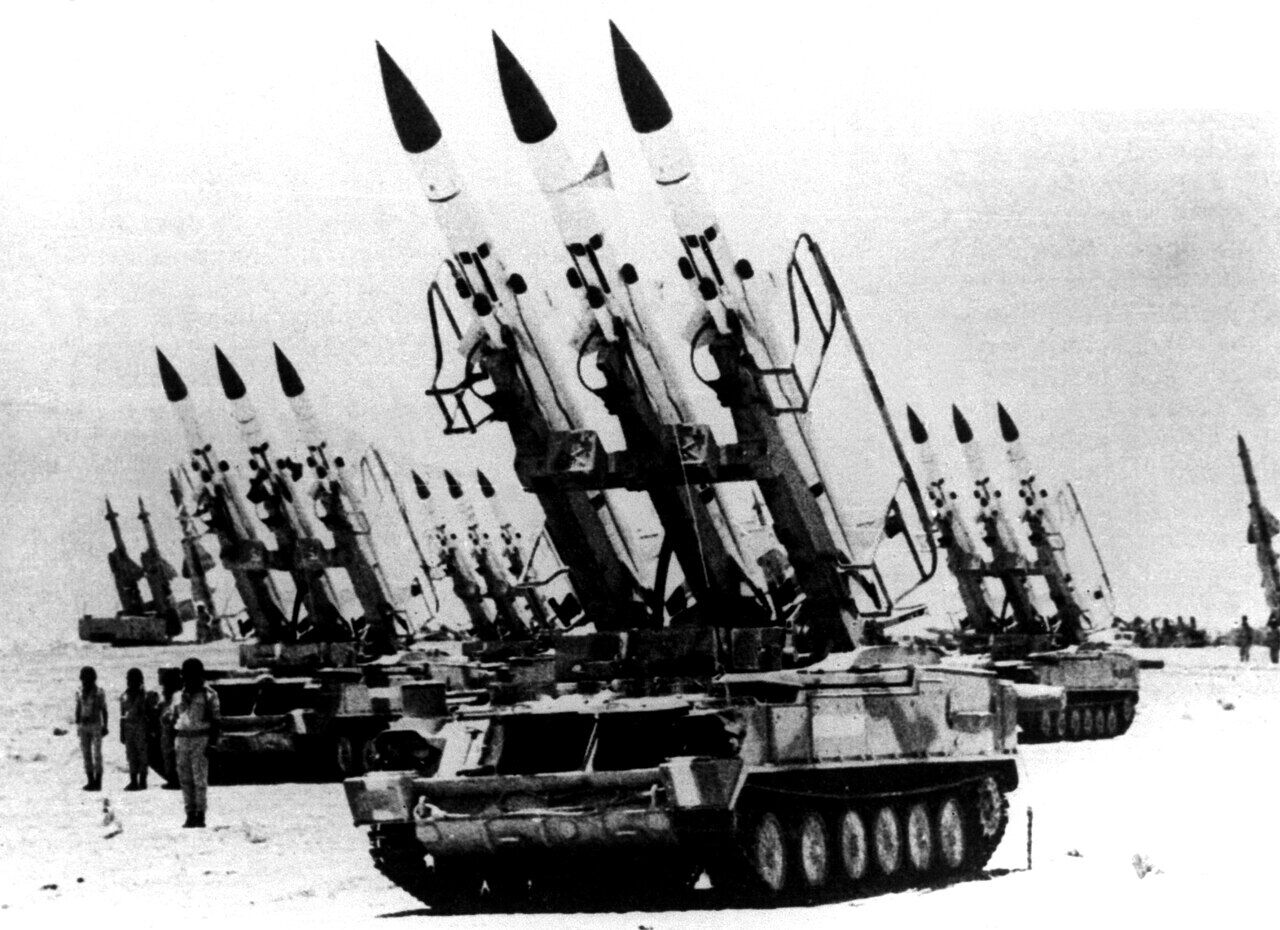

Figure 1 — SA-6 Gainful engagement limits (side view)
Missile effective range 4–24 km and altitude 50 m–14 km [1]; the 1998 Army handout gives 24 km and a 50 m minimum [2]. The shaded region combines the published minimum and maximum range, treated as slant range from the launcher, with the minimum and maximum altitude. Real launch zones are smaller and change with target speed, aspect and altitude. Dashed edges mark limits the cited sources do not give. Other SAMs in this section are drawn faintly for comparison, labelled by SA number. Each scale prints its vertical exaggeration.
Overview
The 2K12 Kub, NATO reporting name SA-6 Gainful, was accepted into Soviet service on 23 January 1967. [1]
The battery
A battery has one 1S91 radar vehicle, four tracked transporter-erector-launchers (TELs) on the GM-578 chassis, each carrying three missiles, and four trucks each carrying three spare missiles and a crane. [1] The 1998 Army handout lists four launch vehicles, one Straight Flush radar vehicle and two reload vehicles per battery. [2]
The 1S91 Straight Flush is a 25 kW G/H-band radar. It acquires targets at 75 km, begins illumination and guidance at 28 km, performs identification friend or foe (IFFIFF GlossaryJoint terms: Identification, friend or foe. A device that emits a signal positively identifying it as a friendly.) and includes an optical sight. [1]
How it engages
The missile flies on command guidance, then homesHoming GlossaryNavigation: Flying to a station by keeping the bearing pointer at the top of the instrument without correcting for wind. In a crosswind it flies a curved path.Weapons: The technique whereby a mobile station directs itself, or is directed, towards a source of primary or reflected energy, or to a specified point. semi-actively on the target lit by the 1S91’s continuous-wave illuminator. [1] The Army handout describes its guidance as semi-active radar. [2] Propulsion is an integral rocket-ramjet: once the solid rocket motor burns out, its empty casing becomes the ramjet’s combustion chamber. The warhead weighs 56 kg and top speed is about MachMach number GlossaryFlight: The ratio of the true airspeed to the speed of sound. All compressibility effects depend on it. 2.8. [1]
Envelope
The missile’s effective range is 4–24 km (2.2–13 NM) and its effective altitude 50 m to 14 km (160 to 45,900 ft); the original Kub is listed at 6–22 km and 100 m–7 km. [1] The 1998 Army handout gives a 24 km range and a 50 m minimum engagement altitude. [2] Figure 1 uses 4–24 km and 50 m–14 km.
On the radar warning receiver
In the DCS F-14F-14 Tomcat AircraftThe Navy's swing-wing fleet defence fighter: two crew, AWG-9 radar and AIM-54 Phoenix., the AN/ALR-67 shows the Straight Flush as 6. [3]
History
In the 1973 Yom Kippur War, Egyptian and Syrian Kub batteries surprised the Israeli Air Force; the system caused the most Israeli losses of any Egyptian anti-aircraft missile, many of them A-4 Skyhawks and F-4 PhantomsF-4 Phantom II AircraftThe big two-seat Cold War fighter-bomber; the F-4E added an internal gun and slats after Vietnam.. In 1995, Bosnian Serb forces using modified Kub systems shot down Scott O’Grady’s F-16F-16 Fighting Falcon AircraftA single-engine multirole fighter: fly-by-wire, 9 g, and the US Air Force's main strike and SEAD aircraft. over Bosnia. [1]
Figure 2 — SA-6 Gainful on a radar warning receiver
- 6
- SA-6 Gainful Straight Flush track radar (Kub)
Layout after the DCS F-14 AN/ALR-67 description [3]: the inner band shows emitters that cannot engage you, the middle band systems within lethal range, and the outer band imminent threats; a symbol flashes when its radar is engaging. Search radars are drawn in the inner band and track radars in the middle band. Bearings are arbitrary. Other aircraft and RWRs use different symbols.
Figure 3 — SA-6 Gainful unit composition
Schematic symbols for each element, drawn from the composition given in [1] [2]; not vehicle outlines and not to scale.
Sources
- 2K12 Kub. Wikipedia (secondary source). https://en.wikipedia.org/wiki/2K12_Kub (accessed 2026-10-25).
- Heavy/Light Opposing Forces Organization and Equipment (student handout, file 4G 3017-6). US Army Aviation Center, Fort Rucker, January 1998. https://man.fas.org/dod-101/sys/land/row/avoac-opfor-sh.htm (accessed 2026-10-25).
- DCS: F-14 Tomcat manual, AN/ALR-67 radar warning receiver. Heatblur Simulations. https://f14.manuals.heatblur.se/f14ab/systems/defensive_systems/rwr/alr_67.html (accessed 2026-10-25).
Wikipedia articles are secondary sources and can change; they are cited with the date they were read. The Heatblur manual describes the DCS F-14's AN/ALR-67, not every aircraft's radar warning receiver.