Drafted — not technically validated
Record revision 1 · The SA-6's successor: each tracked launcher carries its own Fire Dome radar and four semi-active homing missiles.
Real-world system as described in public sources. Figures vary between variants and sources, so differences are shown beside the number they affect. Simulator implementations may differ.
SA-11 Gadfly · 9K37 Buk / 9K37M1 Buk-M1
- Role
- Mobile medium-range army SAM, successor to the SA-6 [1]
- In service
- Buk 1980; Buk-M1 adopted 1983 [1]
- Guidance
- Semi-active radar homing [1]
- Range
- up to 30 km (16.2 NM); minimum not given [1]
- Altitude
- up to 14,000 m (45,900 ft); minimum not given [1]
- Mobility and deployment
- Every component on tracked vehicles [1]
- Radars
- 9S18 / 9S18M1 “Tube Arm / Snow Drift”: Target acquisition; 9S18M1 maximum 85 km, an aircraft at 100 m from 35 km
- 9S35 “Fire Dome” (H/I band): Tracking and engagement, on each TELAR (mechanically scanned)
- RWR symbol
- 11SA-11 Gadfly Fire Dome track radar (Buk) SDSA-11 Gadfly Snow Drift search radar (Buk) [3]
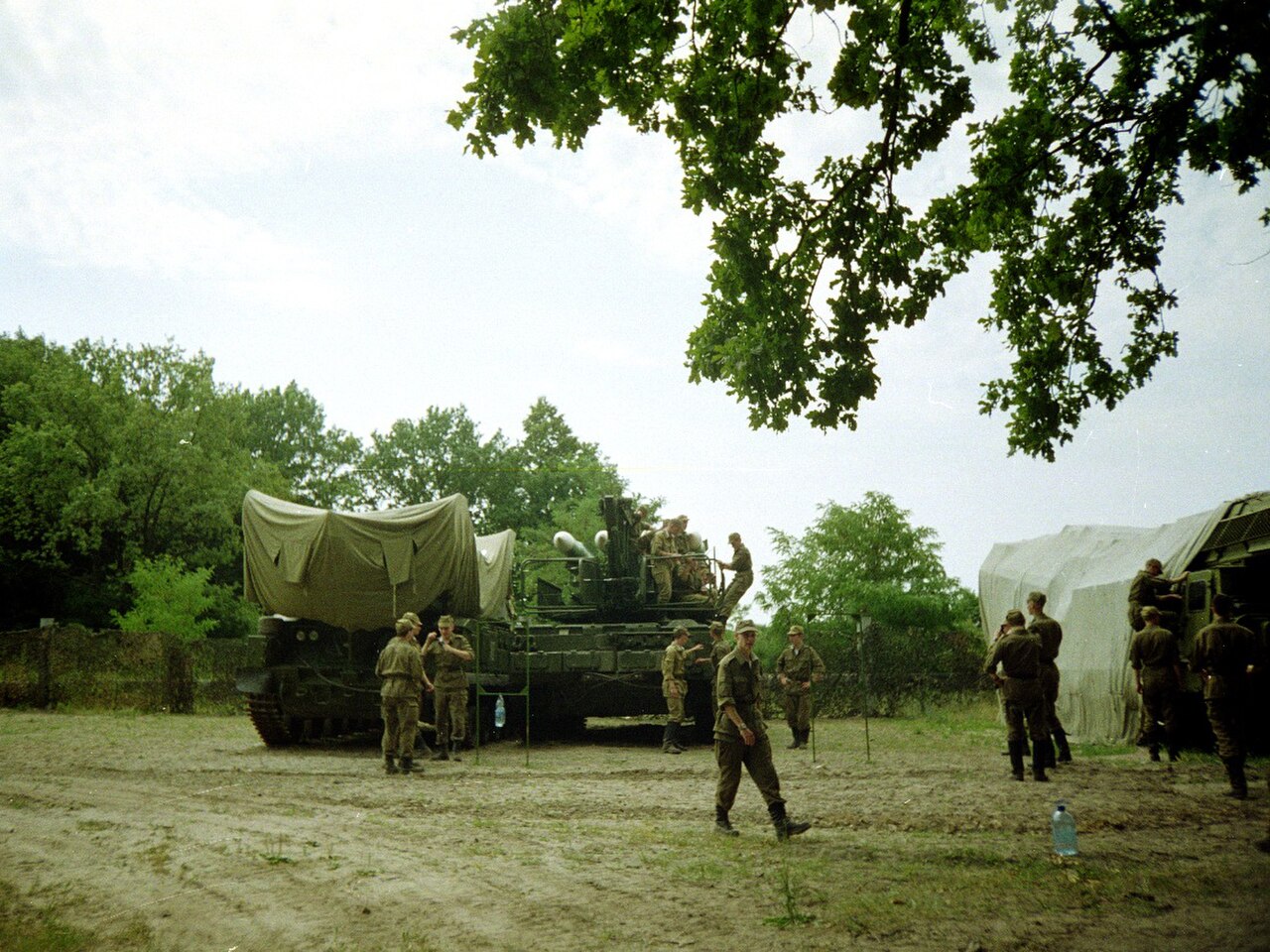

Figure 1 — SA-11 Gadfly engagement limits (side view)
9M38 missile: 30 km range, 14 km altitude; no minimum range or altitude given [1]. The shaded region combines the published minimum and maximum range, treated as slant range from the launcher, with the minimum and maximum altitude. Real launch zones are smaller and change with target speed, aspect and altitude. Dashed edges mark limits the cited sources do not give. Other SAMs in this section are drawn faintly for comparison, labelled by SA number. Each scale prints its vertical exaggeration.
Overview
The 9K37 Buk, NATO reporting name SA-11 Gadfly, succeeded the 2K12 Kub (SA-6SA-6 Gainful Threat systemA mobile tracked battery: one Straight Flush radar, four three-missile launchers, semi-active homing.). Development began on 17 January 1972, and the modernised 9K37M1 Buk-M1 was adopted in 1983 with better radars, kill probability and resistance to electronic countermeasures. [1] Later versions with the 9M317 missile carry a different name, SA-17 GrizzlySA-17 Grizzly Threat systemThe Buk with the 9M317 missile: a larger envelope against aircraft and the ability to engage ballistic missiles.. [1]
The battalion
Each component of the Buk (acquisition and targeting radars, command, launchers and reloads) rides on its own tracked vehicle, so the system moves with the army and is harder to find than a fixed site. [1] A standard battalion has a command vehicle, a target acquisition radar (TAR), six transporter-erector-launcher-and-radar vehicles (TELARs) and three transporter-erector-launchers (TELs); a battery is two TELARs and one TEL. [1]
Each TELAR carries four ready-to-fire missiles and its own 9S35 Fire Dome H/I-band tracking and engagement radar. The TELs look like TELARs but carry a crane instead of a radar; they can fire their missiles, but only with a TELAR guiding them. [1] The 9S18M1 Snow Drift acquisition radar detects out to 85 km and sees an aircraft at 100 m from 35 km away. [1]
How it engages
The command element sorts friend from foe (IFFIFF GlossaryJoint terms: Identification, friend or foe. A device that emits a signal positively identifying it as a friendly.), prioritises targets and passes them to the launchers. The missile needs a radar lock to steer it at first, until its own seeker takes over, and a proximity fuzeProximity fuze GlossaryWeapons: A fuze that detonates before impact when any substantial object is detected at a predetermined distance from it. sets off the 70 kg fragmentation warhead. [1] The 9M38 is a single-stage solid-fuel missile with semi-active radar homingHoming GlossaryNavigation: Flying to a station by keeping the bearing pointer at the top of the instrument without correcting for wind. In a crosswind it flies a curved path.Weapons: The technique whereby a mobile station directs itself, or is directed, towards a source of primary or reflected energy, or to a specified point. and a top speed of MachMach number GlossaryFlight: The ratio of the true airspeed to the speed of sound. All compressibility effects depend on it. 3. [1]
Envelope
The article’s 9M38 data gives an operational range of 30 km (16 NM) and a flight altitude of 14,000 m (46,000 ft), with no minimum range or altitude. [1] Figure 1 uses those figures, and its inner edges are drawn dashed.
On the radar warning receiver
In the DCS F-14F-14 Tomcat AircraftThe Navy's swing-wing fleet defence fighter: two crew, AWG-9 radar and AIM-54 Phoenix., the AN/ALR-67 shows the Fire Dome track radar as 11 and the Snow Drift search radar as SD. [3]
History
In the 2008 South Ossetia war, US officials said a Georgian Buk-M1 caused the loss of a Russian Tu-22M and contributed to the losses of three Su-25sSu-25 Frogfoot AircraftAn armoured Soviet close air support jet; the Su-25T adds Vikhr anti-tank missiles.. A Buk shot down Malaysia Airlines Flight 17 over eastern Ukraine on 17 July 2014, killing 298 people. [1] Ukraine has fitted some Buk-M1 launchers to fire US RIM-7 Sea Sparrow missiles. [1]
Figure 2 — SA-11 Gadfly on a radar warning receiver
- 11
- SA-11 Gadfly Fire Dome track radar (Buk)
- SD
- SA-11 Gadfly Snow Drift search radar (Buk)
Layout after the DCS F-14 AN/ALR-67 description [3]: the inner band shows emitters that cannot engage you, the middle band systems within lethal range, and the outer band imminent threats; a symbol flashes when its radar is engaging. Search radars are drawn in the inner band and track radars in the middle band. Bearings are arbitrary. Other aircraft and RWRs use different symbols.
Figure 3 — SA-11 Gadfly unit composition
Schematic symbols for each element, drawn from the composition given in [1]; not vehicle outlines and not to scale.
Sources
- Buk missile system. Wikipedia (secondary source). https://en.wikipedia.org/wiki/Buk_missile_system (accessed 2026-10-27).
- DCS: F-14 Tomcat manual, AN/ALR-67 radar warning receiver. Heatblur Simulations. https://f14.manuals.heatblur.se/f14ab/systems/defensive_systems/rwr/alr_67.html (accessed 2026-10-27).
Wikipedia articles are secondary sources and can change; they are cited with the date they were read. The Heatblur manual describes the DCS F-14's AN/ALR-67, not every aircraft's radar warning receiver.