Drafted — not technically validated
Record revision 1 · The classic six-launcher site around a Fan Song radar: radio-command-guided, and the SAM US crews met over North Vietnam.
Real-world system as described in public sources. Figures vary between variants and sources, so differences are shown beside the number they affect. Simulator implementations may differ.
SA-2 Guideline · S-75 Dvina (V-750 missile)
- Role
- Area air defence, operated as a complete site [2]
- Guidance
- Radio command guidance [1]
- Range
- 8.05 km (4.3 NM)–43.45 km (23.5 NM) [2]
- Altitude
- up to 18,288 m (60,000 ft); minimum not given [2]
- Mobility and deployment
- Semi-fixed; a site can be packed up and moved in about four hours [2]
- Radars
- SNR-75 “Fan Song”: Target tracking and missile guidance
- P-12 “Spoon Rest”: Early warning, about 275 km; hands targets to the sites
- P-15 “Flat Face” (C band): Search radar at regimental level
- PRV-11: Height finder
- RWR symbol
- 2SA-2 Guideline Fan Song track radar (S-75) FFSA-2, SA-3 and SA-5 Flat Face search radar (S-125 P-19) [3]
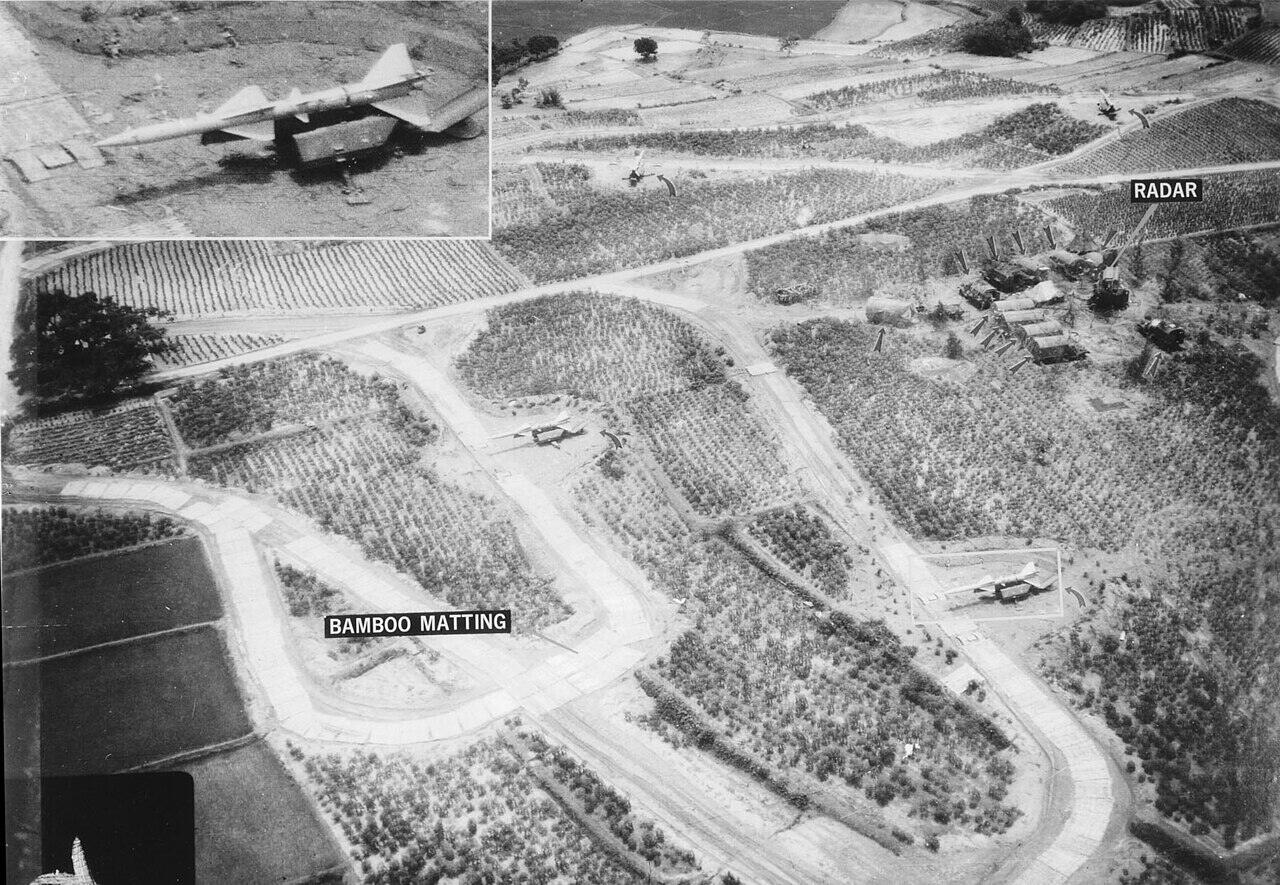

Figure 1 — SA-2 Guideline engagement limits (side view)
US Air Force museum figures: minimum range 5 mi, maximum slant range 27 mi, ceiling about 60,000 ft [2]. Minimum altitude not given. The shaded region combines the published minimum and maximum range, treated as slant range from the launcher, with the minimum and maximum altitude. Real launch zones are smaller and change with target speed, aspect and altitude. Dashed edges mark limits the cited sources do not give. Other SAMs in this section are drawn faintly for comparison, labelled by SA number. Each scale prints its vertical exaggeration.
Overview
The S-75 Dvina, whose V-750 missile NATO calls the SA-2 Guideline, was developed in the mid-1950s and entered service in 1957. [1] [2] The Soviet Union began exporting it in 1960, and it was the SAM US crews met over North Vietnam. [2]
The site
The SA-2 “did not operate alone, but as part of a complete system.” A typical site held six missiles on launchers, control and support vans, a long-range acquisition radar and a guidance radar. [2] The six semi-fixed, single-rail launchers stand about 60 to 100 m apart in a hexagonal “flower” pattern with the radars and guidance vans in the centre, and about six more missiles wait on tractor-trailers nearby. [1]
Each regiment has three battalions. The regimental headquarters holds the early-warning radars: the P-12 Spoon Rest (about 275 km) detects aircraft and hands them to the sites, with a P-15 search radar and a PRV-11 height finder alongside. [1] At the site, the SNR-75 Fan Song tracks the target and guides the missiles. [1]
A trained crew could pack up a site and move it in about four hours, which is why the Wild Weasels’ job of striking active sites quickly mattered. [2]
How it engages
A solid-fuel booster launches the missile and drops away after about six seconds; a liquid-fuel sustainer then carries it while it is guided to the target. [2] Guidance is by radio command: the site’s computers steer each missile on one of three channels. A site tracks one target at a time but can guide three missiles at it. There are two guidance modes: one keeps the missile on the line of sight to the target, for short-range shots, and a lead mode flies up to 10° ahead of it. [1]
Envelope
The museum gives a minimum range of 5 miles, a maximum effective range of about 19 miles, a maximum slant rangeSlant range GlossaryNavigation: The straight-line distance from the aircraft to a station, including height, which is what DME measures, rather than horizontal distance.Weapons: The straight-line distance from the aircraft to the target, or from the release point to the impact point. of 27 miles (about 4.3, 16.5 and 23.5 NM) and a ceiling of about 60,000 ft, with a speed of MachMach number GlossaryFlight: The ratio of the true airspeed to the speed of sound. All compressibility effects depend on it. 3.5 and a 288 lb blast-fragmentation warhead. [2] Figure 1 uses those figures. Other published figures differ: the S-75 article gives 45 km (24 NM), a flight altitude of 25,000 m in its summary and about 20,000 m in its text, and a 195 kg warhead. [1] Treat any single SA-2 number as variant-dependent.
On the radar warning receiver
In the DCS F-14F-14 Tomcat AircraftThe Navy's swing-wing fleet defence fighter: two crew, AWG-9 radar and AIM-54 Phoenix., the AN/ALR-67 shows the Fan Song track radar as 2 and the Flat Face search radar, used with the SA-2, SA-3SA-3 Goa Threat systemCommand-guided by the Low Blow radar from two- or four-missile launchers; the system that downed an F-117. and SA-5SA-5 Gammon Threat systemA very long-range strategic SAM guided by the Square Pair continuous-wave radar., as FF. [3]
History
An S-75 shot down Francis Gary Powers’ U-2 near Sverdlovsk on 1 May 1960, and another downed Maj. Rudolf Anderson’s U-2 over Cuba on 27 October 1962. [1] [2] Over North Vietnam, an S-75 shot down a USAF F-4CF-4 Phantom II AircraftThe big two-seat Cold War fighter-bomber; the F-4E added an internal gun and slats after Vietnam. on 24 July 1965, the first US aircraft lost to a SAM in that war. In eleven days of Operation Linebacker II in December 1972, 266 missiles were fired at B-52s and 15 B-52s were lost. [1]
Figure 2 — SA-2 Guideline on a radar warning receiver
- 2
- SA-2 Guideline Fan Song track radar (S-75)
- FF
- SA-2, SA-3 and SA-5 Flat Face search radar (S-125 P-19)
Layout after the DCS F-14 AN/ALR-67 description [3]: the inner band shows emitters that cannot engage you, the middle band systems within lethal range, and the outer band imminent threats; a symbol flashes when its radar is engaging. Search radars are drawn in the inner band and track radars in the middle band. Bearings are arbitrary. Other aircraft and RWRs use different symbols.
Figure 3 — SA-2 Guideline site (plan view)
Schematic symbols for each element, drawn from the composition given in [1] [2]; not vehicle outlines and not to scale.
Sources
- S-75 Dvina. Wikipedia (secondary source). https://en.wikipedia.org/wiki/S-75_Dvina (accessed 2026-10-25).
- SA-2 Surface-to-Air Missile (fact sheet). National Museum of the United States Air Force. https://www.nationalmuseum.af.mil/Visit/Museum-Exhibits/Fact-Sheets/Display/Article/196037/ (accessed 2026-10-25).
- DCS: F-14 Tomcat manual, AN/ALR-67 radar warning receiver. Heatblur Simulations. https://f14.manuals.heatblur.se/f14ab/systems/defensive_systems/rwr/alr_67.html (accessed 2026-10-25).
Wikipedia articles are secondary sources and can change; they are cited with the date they were read. The Heatblur manual describes the DCS F-14's AN/ALR-67, not every aircraft's radar warning receiver.