Drafted — not technically validated
Record revision 1 · A shoulder-fired, rear-aspect infrared missile: nothing on the RWR, and flares proved highly effective against it.
Real-world system as described in public sources. Figures vary between variants and sources, so differences are shown beside the number they affect. Simulator implementations may differ.
SA-7 Grail · 9K32 Strela-2 (Strela-2M is SA-7b)
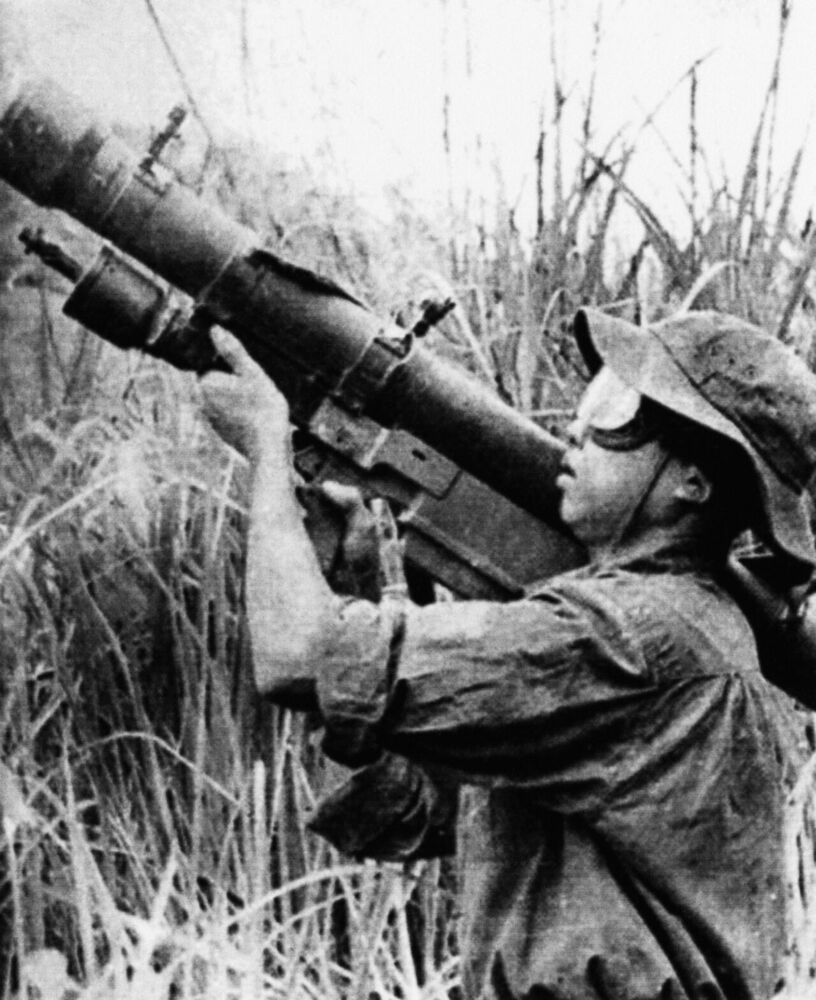

Figure 1 — SA-7 Grail engagement limits (side view)
Strela-2M (SA-7b): 800 m–4.2 km range, 50–2,300 m altitude [1]. The shaded region combines the published minimum and maximum range, treated as slant range from the launcher, with the minimum and maximum altitude. Real launch zones are smaller and change with target speed, aspect and altitude. Dashed edges mark limits the cited sources do not give. Other SAMs in this section are drawn faintly for comparison, labelled by SA number. Each scale prints its vertical exaggeration.
Overview
The 9K32 Strela-2, NATO reporting name SA-7 Grail, is a shoulder-fired infrared SAM. Full-scale production began in 1970. The improved Strela-2M is the SA-7b. [1]
How it engages
The missile homes passively on infrared with an uncooled lead sulphide seeker that sees wavelengths below 2.8 µm, through a 1.9° field of view, and can track at 9° per second. [1] Against jets, that seeker only allows rear-aspect shots. The original could only engage from the rear hemisphere and guided poorly against natural or man-made background infrared sources, and flares proved a highly effective countermeasure against both versions. [1] The Army handout also lists the SA-7 as passive infrared, rear aspect. [2]
The Strela-2M’s higher-thrust motor raised slant range from 3.4 to 4.2 km and the ceiling from 1.5 to 2.3 km, and its guidance could engage approaching helicopters and propeller aircraft (but not jets). [1] Top missile speed is 430 m/s for the Strela-2 and 500 m/s for the Strela-2M. The missile weighs 9.8 kg and carries a 1.15 kg blast-fragmentation warhead with 370 g of explosive (the article also gives 1.17 kg). [1]
Envelope
| Version | Range | Altitude |
|---|---|---|
| Strela-2 (SA-7a) | up to 3.7 km (2.0 NM) | 50–1,500 m (160–4,900 ft) |
| Strela-2M (SA-7b) | 800 m–4.2 km (0.4–2.3 NM) | 50–2,300 m (160–7,500 ft) |
Source: [1]. The same article also gives a 3.4 km slant range for the original Strela-2 against the 3.7 km in this table, without saying which is which. The 1998 Army handout gives 3.6 km for the SA-7a and 5.5 km for the SA-7b, both with a 15 m minimum engagement altitude. [2] Figure 1 uses the Strela-2M figures.
On the radar warning receiver
Nothing. The SA-7 has no radar, so a radar warning receiver cannot see it.
Figure 2 — SA-7 Grail on a radar warning receiver
No symbol. It homes passively on infrared and has no radar, so a radar warning receiver has nothing to detect.
Figure 3 — SA-7 Grail unit composition
Schematic symbols for each element, drawn from the composition given in [1]; not vehicle outlines and not to scale.
Sources
- 9K32 Strela-2. Wikipedia (secondary source). https://en.wikipedia.org/wiki/9K32_Strela-2 (accessed 2026-10-25).
- Heavy/Light Opposing Forces Organization and Equipment (student handout, file 4G 3017-6). US Army Aviation Center, Fort Rucker, January 1998. https://man.fas.org/dod-101/sys/land/row/avoac-opfor-sh.htm (accessed 2026-10-25).
Wikipedia articles are secondary sources and can change; they are cited with the date they were read. The Heatblur manual describes the DCS F-14's AN/ALR-67, not every aircraft's radar warning receiver.