Drafted — not technically validated
Record revision 1 · A tracked, ramjet-powered army SAM carrying two missiles per launcher.
Real-world system as described in public sources. Figures vary between variants and sources, so differences are shown beside the number they affect. Simulator implementations may differ.
SA-4 Ganef · 2K11 Krug
- Role
- Tracked army SAM system [1]
- In service
- 1965 (early version); Krug-A 1967; Krug-M 1971 [1]
- Guidance
- Radio command with terminal semi-active homing (unverified here; see text)
- Range
- up to 50 km (27.0 NM); minimum not given [1]
- Altitude
- 100 m (330 ft)–27,000 m (88,600 ft) [1]
- Mobility and deployment
- Tracked launchers on the GM-123 chassis [1]
- Radars
- 1S32 “Pat Hand (unverified here)” (H band): Continuous-wave fire control and guidance, 128 km
- P-40 (1S12) “Long Track” (E band): Early warning, 175 km; passes target data by radio datalink
- PRV-9 “Thin Skin” (E band): Height finder, 240 km
- RWR symbol
- None
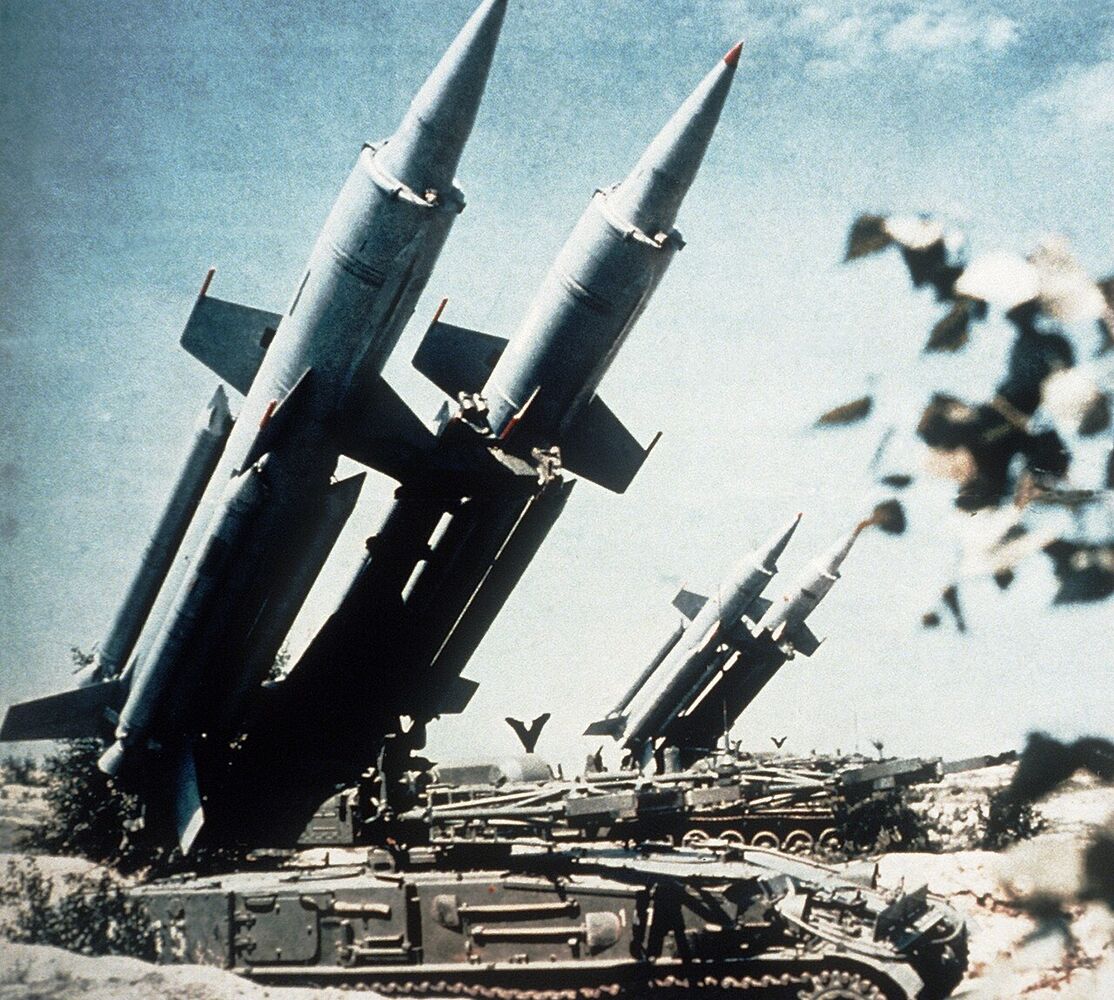

Figure 1 — SA-4 Ganef engagement limits (side view)
Effective range 50–55 km depending on version (50 km drawn); engagement altitude 100 m–27 km [1]. No minimum range in the cited source. The shaded region combines the published minimum and maximum range, treated as slant range from the launcher, with the minimum and maximum altitude. Real launch zones are smaller and change with target speed, aspect and altitude. Dashed edges mark limits the cited sources do not give. Other SAMs in this section are drawn faintly for comparison, labelled by SA number. Each scale prints its vertical exaggeration.
Overview
The 2K11 Krug, NATO reporting name SA-4 Ganef (after a Yiddish word), is a Soviet tracked SAM system. An early version entered service in 1965, the first operational version, Krug-A, in 1967, and the Krug-M in 1971. [1]
The launcher and the unit
Each 2P24 launcher is a tracked vehicle on the GM-123 chassis carrying two missiles on a turntable that rotates through 360° and elevates to 70°. [1] A SAM battalion has three batteries plus a command battery; a regiment has two battalions and a brigade three. [1]
The 1S32 fire-control and guidance radar is an H-band continuous-wave radar with a range of 128 km. Early warningEarly warning GlossaryJoint terms: Early notification of the launch or approach of unknown weapons or weapons carriers. comes from the E-band P-40 Long Track (175 km), which passes target data to the Krug by radio datalink, and height finding from the E-band PRV-9 Thin Skin (240 km). [1]
How it engages
Solid-fuel boosters launch the missile, and a liquid-fuelled ramjet sustainer then takes over, for speeds up to MachMach number GlossaryFlight: The ratio of the true airspeed to the speed of sound. All compressibility effects depend on it. 4. It carries a 135 kg (300 lb) fragmentation warhead. The effective range is 50–55 km (27–30 NM), depending on version, and possible engagement altitudes run from 100 m to 27 km (330 to 88,600 ft). [1] Optical tracking can be used for guidance in heavy electronic countermeasures (ECM), and in its three-point mode the Krug can home on a jammingElectromagnetic jamming GlossaryJoint terms: The deliberate radiation, reradiation, or reflection of electromagnetic energy for the purpose of preventing or reducing an enemy's effective use of the electromagnetic spectrum, and with the intent of degrading or… target. [1]
Unverified here: that the missile is radio-command guided with semi-active radar homing at the end, illuminated by the 1S32, and that NATO calls the 1S32 Pat Hand. Both are widely published, but neither is stated in the source text reviewed for this revision.
On the radar warning receiver
The DCS F-14’s AN/ALR-67 threat table has no SA-4 entry. [2]
Figure 2 — SA-4 Ganef on a radar warning receiver
No symbol. The cited F-14 AN/ALR-67 threat table [2] has no SA-4 or 1S32 entry, so this aircraft's RWR would not label it as an SA-4.
Figure 3 — SA-4 Ganef unit composition
Schematic symbols for each element, drawn from the composition given in [1]; not vehicle outlines and not to scale.
Sources
- 2K11 Krug. Wikipedia (secondary source). https://en.wikipedia.org/wiki/2K11_Krug (accessed 2026-10-25).
- DCS: F-14 Tomcat manual, AN/ALR-67 radar warning receiver. Heatblur Simulations. https://f14.manuals.heatblur.se/f14ab/systems/defensive_systems/rwr/alr_67.html (accessed 2026-10-25).
Wikipedia articles are secondary sources and can change; they are cited with the date they were read. The Heatblur manual describes the DCS F-14's AN/ALR-67, not every aircraft's radar warning receiver.