Drafted — not technically validated
Record revision 1 · Twin 30 mm cannon and eight command-guided missiles on one tracked vehicle with its own Hot Shot radar.
Real-world system as described in public sources. Figures vary between variants and sources, so differences are shown beside the number they affect. Simulator implementations may differ.
SA-19 Grison · 2K22 Tunguska (2S6 vehicle, 9M311 missile)
- Role
- Self-propelled air defence gun and missile vehicle [1]
- In service
- Accepted 8 September 1982; 2K22M 1990; Tunguska-M1 2003 [1]
- Mobility and deployment
- Tracked GM-352 chassis [1]
- Radars
- 1RL144 “Hot Shot” (E / J band): On the vehicle: rear E-band acquisition radar plus front J-band monopulse tracking radar, tracking targets up to 3,500 m
- RWR symbol
- 19SA-19 Grison Hot Shot search and track radar (Tunguska 2C6M) [3]
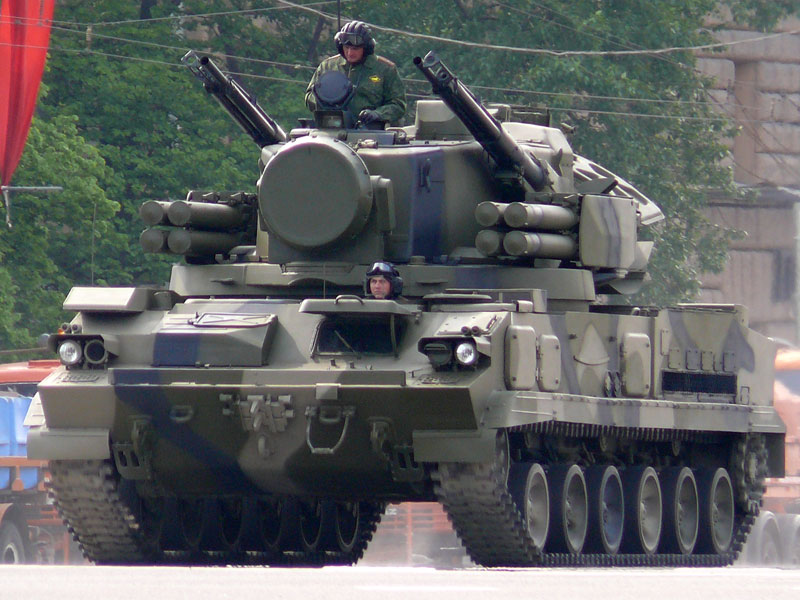

Figure 1 — SA-19 Grison engagement limits (side view)
9M311 missile: 1.5–8 km range, 5–3,500 m altitude [1]; the 1998 Army handout gives 8 km and a 15 m minimum [2]. The shaded region combines the published minimum and maximum range, treated as slant range from the launcher, with the minimum and maximum altitude. Real launch zones are smaller and change with target speed, aspect and altitude. Dashed edges mark limits the cited sources do not give. Other SAMs in this section are drawn faintly for comparison, labelled by SA number. Each scale prints its vertical exaggeration.
Overview
The 2K22 Tunguska is a Soviet tracked vehicle armed with both guns and surface-to-air missiles, protecting tank and infantry regiments from low-flying aircraft, helicopters and cruise missiles by day and night in all weather. SA-19 Grison is NATO’s name for its missile. [1] It was designed to fix the ZSU-23-4’s short range and lack of early warning, and to counter aircraft built to survive 23 mm cannon fire, such as the A-10A-10 Thunderbolt II AircraftThe Warthog: a straight-wing, armoured close air support jet built around the 30 mm GAU-8 cannon. and the AH-64AH-64D Apache Longbow AircraftThe US Army's twin-engine attack helicopter, flown from Panama and Desert Storm to Afghanistan; the Longbow adds a mast-mounted radar. Apache. [1] It was accepted into service on 8 September 1982 with four ready missiles; the 2K22M of 1990 carries eight. [1] The 1998 Army handout calls the 2S6 the replacement for the ZSU-23-4. [2]
The battery
A battery has six 2S6 combat vehicles, each with 9M311 missiles and two 2A38 30 mm cannon, and up to three 2F77 transloader trucks. Targets can be shared out between the six vehicles over an encrypted radio link from a Ranzhir or PPRU battery command post. [1]
The 1RL144 Hot Shot radar combines a 10 kW E-band acquisition radar on the rear of the turret with a 150 kW J-band monopulse tracking radar on the front, and tracks targets as high as 3,500 m (11,500 ft). [1]
How it engages
The tracking radar feeds target range, elevation and bearing to the fire-control computer, which lays the guns or sends course corrections to the missile. The gunner can track with a stabilised sight instead. [1] The missile boosts to 900 m/s and sustains 600 m/s; the original 9M311 has a laser proximity fuzeProximity fuze GlossaryWeapons: A fuze that detonates before impact when any substantial object is detected at a predetermined distance from it., replaced by a radio fuzeFuze GlossaryWeapons: A device that causes the detonation of an explosive charge at the proper time after certain conditions are met. A bomb fuze is mechanical or electrical, and is classed by what sets it off (impact, mechanical time… on the Tunguska-M1’s 9M311-M1. [1] The 1998 Army handout lists radar command guidance for the missile and a 4,000 m range for the 30 mm guns. [2] The cannon fire alternately at a combined 3,900–5,000 rounds a minute. [1]
Envelope
The 9M311 engages at 1.5–8 km (0.8–4.3 NM) and 5–3,500 m (16–11,500 ft); the Tunguska-M1’s 9M311-M1 reaches 2.5–10 km and 15–3,500 m. [1] The 1998 Army handout gives 8 km and a 15 m minimum engagement altitude. [2] Figure 1 uses the original 9M311.
On the radar warning receiver
In the DCS F-14F-14 Tomcat AircraftThe Navy's swing-wing fleet defence fighter: two crew, AWG-9 radar and AIM-54 Phoenix., the AN/ALR-67 shows the Hot Shot search and track radar as 19. [3]
History
The Tunguska has served Soviet and Russian forces since 1984, and was used by Russia in the 2008 South Ossetia war. Russian and Ukrainian forces both use it in the war that began in 2022. Export users include India, Morocco and Myanmar. [1]
Figure 2 — SA-19 Grison on a radar warning receiver
- 19
- SA-19 Grison Hot Shot search and track radar (Tunguska 2C6M)
Layout after the DCS F-14 AN/ALR-67 description [3]: the inner band shows emitters that cannot engage you, the middle band systems within lethal range, and the outer band imminent threats; a symbol flashes when its radar is engaging. Search radars are drawn in the inner band and track radars in the middle band. Bearings are arbitrary. Other aircraft and RWRs use different symbols.
Figure 3 — SA-19 Grison unit composition
Schematic symbols for each element, drawn from the composition given in [1]; not vehicle outlines and not to scale.
Sources
- 2K22 Tunguska. Wikipedia (secondary source). https://en.wikipedia.org/wiki/2K22_Tunguska (accessed 2026-10-27).
- Heavy/Light Opposing Forces Organization and Equipment (student handout, file 4G 3017-6). US Army Aviation Center, Fort Rucker, January 1998. https://man.fas.org/dod-101/sys/land/row/avoac-opfor-sh.htm (accessed 2026-10-27).
- DCS: F-14 Tomcat manual, AN/ALR-67 radar warning receiver. Heatblur Simulations. https://f14.manuals.heatblur.se/f14ab/systems/defensive_systems/rwr/alr_67.html (accessed 2026-10-27).
Wikipedia articles are secondary sources and can change; they are cited with the date they were read. The Heatblur manual describes the DCS F-14's AN/ALR-67, not every aircraft's radar warning receiver.