Drafted — not technically validated
Record revision 1 · The Buk with the 9M317 missile: a larger envelope against aircraft and the ability to engage ballistic missiles.
Real-world system as described in public sources. Figures vary between variants and sources, so differences are shown beside the number they affect. Simulator implementations may differ.
SA-17 Grizzly · 9K37M1-2 Buk-M1-2 / 9K317 Buk-M2
- Role
- Mobile medium-range army SAM [1]
- In service
- Buk-M1-2 entered service 1998 [1]
- Guidance
- Inertial correction with semi-active radar homing (9M317) [1]
- Range
- 3 km (1.6 NM)–42 km (22.7 NM) [1]
- Altitude
- 15 m (50 ft)–25,000 m (82,000 ft) [1]
- Mobility and deployment
- Tracked GM-569 chassis; wheeled Buk-M2EK export variant [1]
- Radars
- 9S18M1-1 “Snow Drift”: Target acquisition, 140 km, 60 m–25 km altitude
- 9S35M1 “Fire Dome” (H/I band): Tracking and engagement, on each TELAR; a phased array on the Buk-M2
- 9S36: Buk-M2 only: tracking radar on a 21 m mast, guiding two TELs in forest or hills
- RWR symbol
- None
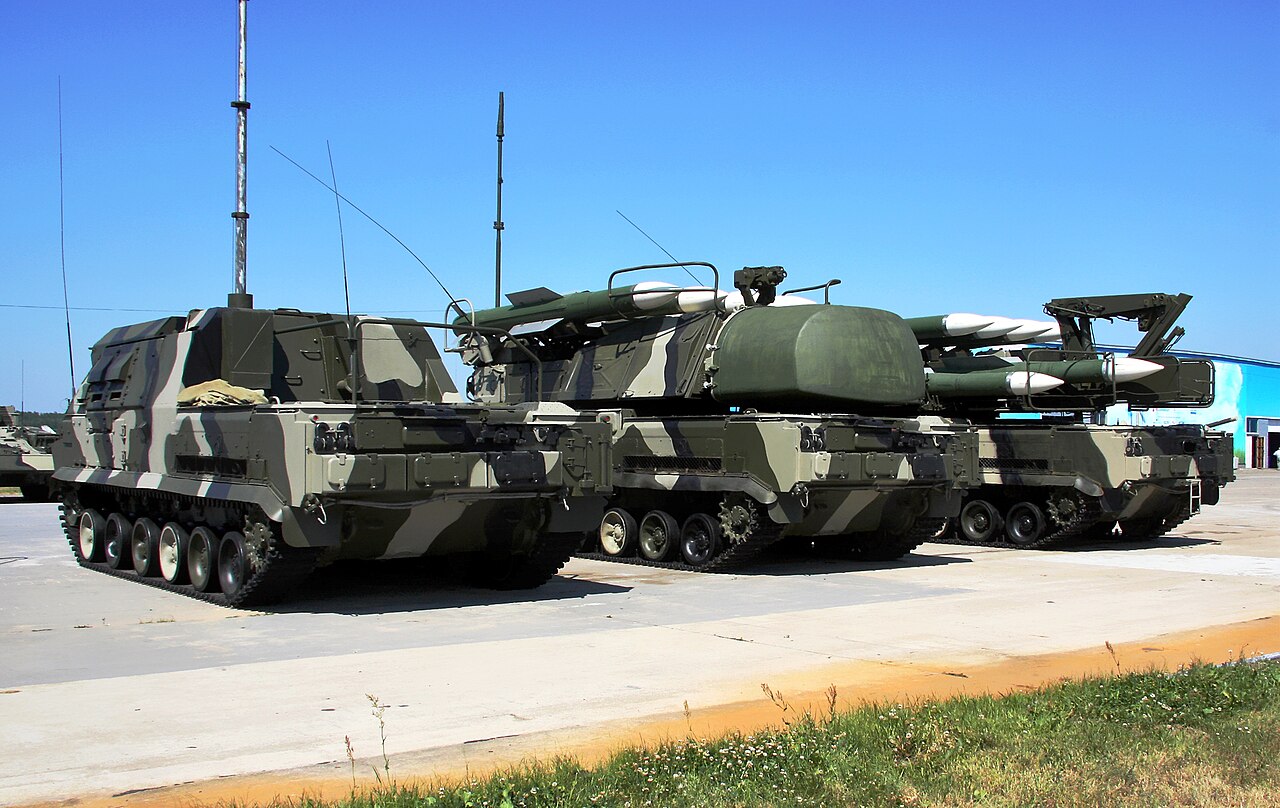

Figure 1 — SA-17 Grizzly engagement limits (side view)
Buk system data for aircraft: 3–42 km range, 15 m–25 km altitude, variant not named; the 9M317 reaches up to 45 km and 25 km [1]. The shaded region combines the published minimum and maximum range, treated as slant range from the launcher, with the minimum and maximum altitude. Real launch zones are smaller and change with target speed, aspect and altitude. Dashed edges mark limits the cited sources do not give. Other SAMs in this section are drawn faintly for comparison, labelled by SA number. Each scale prints its vertical exaggeration.
Overview
The 9K37M1-2 Buk-M1-2, which entered service in 1998, introduced the 9M317 missile to the Buk (SA-11SA-11 Gadfly Threat systemThe SA-6's successor: each tracked launcher carries its own Fire Dome radar and four semi-active homing missiles.) family. With it the system received a new NATO reporting name, SA-17 Grizzly, and the GRAU designation 9K317, which covers all later versions. [1] The new missile let the system engage ballistic missiles and surface targets and enlarged its envelope against aircraft and helicopters; the Buk-M1-2 can still fire the older 9M38. [1] The export name is Ural. The Buk-M2 adds a third-generation phased-array fire-control radar. The later Buk-M3 is SA-27. [1]
The battalion
The organisation is the same as the SA-11SA-11 Gadfly Threat systemThe SA-6's successor: each tracked launcher carries its own Fire Dome radar and four semi-active homing missiles.’s: a command vehicle, a target acquisition radar, six TELARs and three TELs. Each Buk-M1-2 TELAR, on the GM-569 chassis, has a crew of four, a fire-control radar at the front and four ready-to-fire missiles, and can guide up to three missiles at one target. It can also be fitted with a thermal camera and laser rangefinder for passive tracking. [1]
The Buk-M2 TELAR uses a passive electronically scanned array instead of the original mechanically scanned dish. Its 9S36 vehicle carries a radar on a mast but no missiles and can guide two TELs against up to four targets, for use in forested or hilly ground. [1]
How it engages
The 9M317 uses inertial correction with semi-active radar homingHoming GlossaryNavigation: Flying to a station by keeping the bearing pointer at the top of the instrument without correcting for wind. In a crosswind it flies a curved path.Weapons: The technique whereby a mobile station directs itself, or is directed, towards a source of primary or reflected energy, or to a specified point. and proportional navigation. [1] The missile weighs 715 kg against the 9M38’s 690 kg. [1] The system’s kill probability is estimated at 70 to 93% per missile against an aircraft. [1]
Envelope
The article’s Buk system data, which does not name a variant, gives aircraft engagement at 3–42 km (1.6–23 NM) and 15 m to 25 km (49 to 82,000 ft). It describes the 9M317’s envelope as up to 45 km in range and 25 km in altitude. [1] Figure 1 uses the 3–42 km system figures.
On the radar warning receiver
The cited AN/ALR-67 table names the Fire Dome and Snow Drift radars only as SA-11 (11 and SD; see SA-11SA-11 Gadfly Threat systemThe SA-6's successor: each tracked launcher carries its own Fire Dome radar and four semi-active homing missiles.), and has no separate entry for the SA-17.
History
Russia has used the Buk-M1-2 and later versions in Ukraine: on 27 February 2022 a Ukrainian TB2 drone destroyed a Russian Buk-M1-2 TELAR and TEL near Malin. [1] Syria received Buk-M2E systems in 2011, and Venezuela operates the Buk-M2E. [1]
Figure 2 — SA-17 Grizzly on a radar warning receiver
No symbol. The cited AN/ALR-67 table lists the Fire Dome and Snow Drift only as SA-11 (11 and SD; see the SA-11 page) and has no separate SA-17 entry.
Figure 3 — SA-17 Grizzly unit composition
Schematic symbols for each element, drawn from the composition given in [1]; not vehicle outlines and not to scale.
Sources
- Buk missile system. Wikipedia (secondary source). https://en.wikipedia.org/wiki/Buk_missile_system (accessed 2026-10-27).
Wikipedia articles are secondary sources and can change; they are cited with the date they were read. The Heatblur manual describes the DCS F-14's AN/ALR-67, not every aircraft's radar warning receiver.