Drafted — not technically validated
Record revision 1 · The full Igla: a shoulder-fired missile whose infrared and ultraviolet seeker resists flares, with head-on capability.
Real-world system as described in public sources. Figures vary between variants and sources, so differences are shown beside the number they affect. Simulator implementations may differ.
SA-18 Grouse · 9K38 Igla
- Role
- Man-portable air defence system (MANPADS) [1]
- In service
- Accepted 1983 [1]
- Guidance
- Passive infrared homing, with an ultraviolet channel against flares [1]
- Range
- up to 5.2 km (2.8 NM); minimum not given [1]
- Altitude
- up to 3,500 m (11,500 ft); minimum not given [1]
- Mobility and deployment
- Carried and fired by one soldier; 17.9 kg complete [1]
- Radars
- None: infrared-guided
- RWR symbol
- None
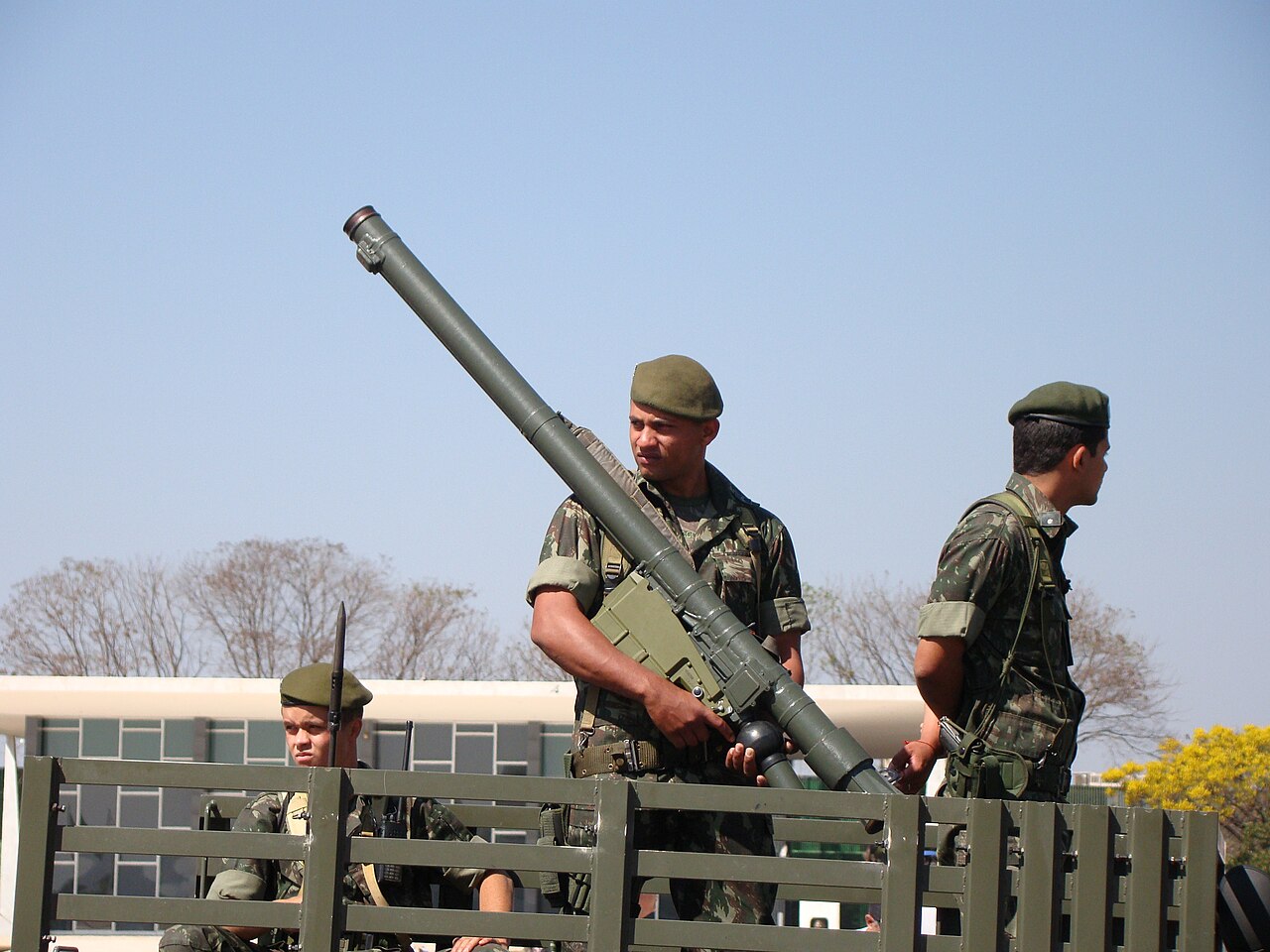

Figure 1 — SA-18 Grouse engagement limits (side view)
5.2 km maximum range; 3.5 km ceiling, variant not named; no minimum range or altitude given [1]. The shaded region combines the published minimum and maximum range, treated as slant range from the launcher, with the minimum and maximum altitude. Real launch zones are smaller and change with target speed, aspect and altitude. Dashed edges mark limits the cited sources do not give. Other SAMs in this section are drawn faintly for comparison, labelled by SA number. Each scale prints its vertical exaggeration.
Overview
The 9K38 Igla, NATO reporting name SA-18 Grouse, is the full-capability version of the Igla. It is an all-new design rather than an improved Strela, and its 9M39 missile was accepted into Soviet Army service in 1983, two years after the simplified Igla-1 (SA-16SA-16 Gimlet Threat systemThe simplified first Igla: a shoulder-fired infrared missile with optional IFF, credited with Gulf War and Kosovo hits.). [1] It is in service with more than 30 countries. The naval version is SA-N-10, and the later Igla-S of 2004 is SA-24 Grinch. [1]
How it engages
The main gains over the Igla-1 are much better resistance to flaresDecoy flare GlossaryWeapons: A flare dispensed from a launcher on the aircraft and fired during evasion tactics when the aircraft is threatened by enemy heat-seeking missiles. and jamming and a more sensitive seeker. Its 9E410 seeker works in both infrared and ultraviolet, which makes it harder to decoy with flares and effective against lamp-type infrared jammers. It widens forward-hemisphere engagement and can, in favourable conditions, engage a fighter approaching head-on. [1] The rocket burns harder and shorter for a higher peak speed (600 m/s average, 800 m/s peak), and a needle-like spike on the seeker dome cuts drag; igla means needle. [1] The 1.17 kg warhead uses delayed impact, magnetic and grazing fuzes. [1]
Envelope
The article gives the Igla a maximum range of 5.2 km (2.8 NM) and lists a 3.5 km (11,000 ft) flight ceiling without saying which variant it applies to. It gives no minimum range or altitude. [1] Figure 1 uses 5.2 km and 3.5 km with the inner edge and floor dashed.
On the radar warning receiver
The SA-18 has no radar, so a radar warning receiver gives no warning of it.
History
On 16 April 1994 a Bosnian Serb Igla shot down an RAF Sea Harrier over Goražde; the pilot ejected and was rescued (the Strela-3 article credits the same loss to an SA-14SA-14 Gremlin Threat systemA shoulder-fired missile with a cooled infrared seeker: harder to decoy than the SA-7, with limited head-on capability.). On 30 August 1995 an Igla brought down a French Mirage 2000D over Pale, and both crew were captured. [1] On 13 May 2016 PKK militants shot down a Turkish Army AH-1W SuperCobra with an SA-18. [1] Ukrainian forces have reported shooting down Russian Su-25sSu-25 Frogfoot AircraftAn armoured Soviet close air support jet; the Su-25T adds Vikhr anti-tank missiles. and an Su-34 with Igla systems since 2022. [1]
Figure 2 — SA-18 Grouse on a radar warning receiver
No symbol. It homes passively on infrared and has no radar, so a radar warning receiver has nothing to detect.
Figure 3 — SA-18 Grouse unit composition
Schematic symbols for each element, drawn from the composition given in [1]; not vehicle outlines and not to scale.
Sources
- 9K38 Igla. Wikipedia (secondary source). https://en.wikipedia.org/wiki/9K38_Igla (accessed 2026-10-27).
Wikipedia articles are secondary sources and can change; they are cited with the date they were read. The Heatblur manual describes the DCS F-14's AN/ALR-67, not every aircraft's radar warning receiver.