Drafted — not technically validated
Record revision 1 · The simplified first Igla: a shoulder-fired infrared missile with optional IFF, credited with Gulf War and Kosovo hits.
Real-world system as described in public sources. Figures vary between variants and sources, so differences are shown beside the number they affect. Simulator implementations may differ.
SA-16 Gimlet · 9K310 Igla-1
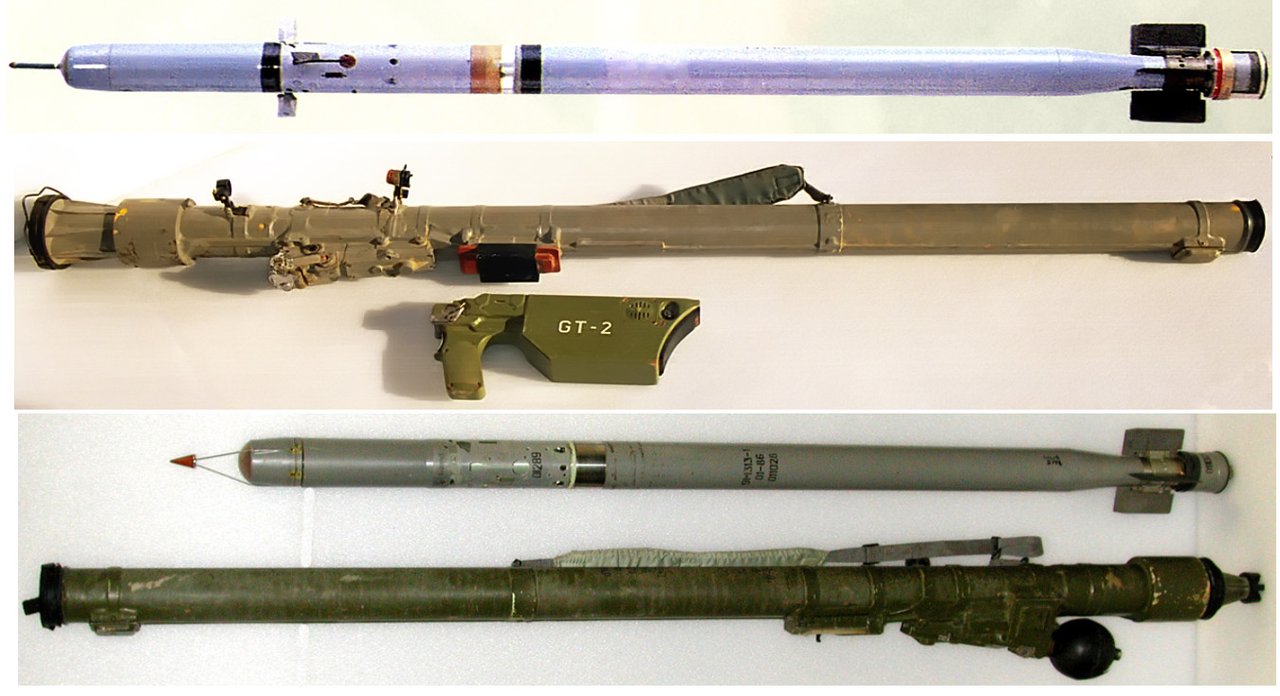

Figure 1 — SA-16 Gimlet engagement limits (side view)
5 km maximum range, 2,500 m maximum altitude [1]; the 1998 Army handout gives 6 km+ and a 0 m minimum [2]. The shaded region combines the published minimum and maximum range, treated as slant range from the launcher, with the minimum and maximum altitude. Real launch zones are smaller and change with target speed, aspect and altitude. Dashed edges mark limits the cited sources do not give. Other SAMs in this section are drawn faintly for comparison, labelled by SA number. Each scale prints its vertical exaggeration.
Overview
The 9K310 Igla-1, NATO reporting name SA-16 Gimlet, is a simplified early version of the Igla (SA-18SA-18 Grouse Threat systemThe full Igla: a shoulder-fired missile whose infrared and ultraviolet seeker resists flares, with head-on capability.). Development of the Igla began in 1972, and when it ran late the programme split in 1978: the Igla-1, with a simpler seeker based on the Strela-3’s (SA-14SA-14 Gremlin Threat systemA shoulder-fired missile with a cooled infrared seeker: harder to decoy than the SA-7, with limited head-on capability.), would enter service first. The Igla-1 and its 9M313 missile were accepted into Soviet Army service on 11 March 1981. [1] The export version is the Igla-1E. [1]
How it engages
Compared with the Strela-3 it adds optional IFFIFF GlossaryJoint terms: Identification, friend or foe. A device that emits a signal positively identifying it as a friendly. to avoid firing on friendly aircraft, automatic lead and super-elevation that make shooting simpler and shorten the minimum range, and a slightly larger, lower-drag missile with a longer reach. Its delayed-impact fuze and a terminal manoeuvre aim the hit at the fuselage rather than the jet nozzle, and an extra charge sets off any rocket fuel left on impact. It resists flaresDecoy flare GlossaryWeapons: A flare dispensed from a launcher on the aircraft and fired during evasion tactics when the aircraft is threatened by enemy heat-seeking missiles. and infrared jammers better than the Strela-3. [1] A tripod-mounted nose spike cuts drag. [1] The 1998 Army handout lists passive IR/UV guidance with a cooled seeker and all-aspect capability. [2]
The manufacturer gives a kill probability of 0.30 to 0.48 against an unprotected target, falling to 0.24 against flares and jamming. [1]
Envelope
The Igla-1 has a maximum range of 5,000 m (2.7 NM) and reaches targets up to 2,500 m (8,200 ft). [1] The 1998 Army handout gives a range of 6 km+ and a 0 m minimum engagement altitude. [2] Neither source gives a minimum range, so Figure 1 draws 5 km and 2,500 m with the inner edge and floor dashed.
On the radar warning receiver
The SA-16 has no radar, so a radar warning receiver gives no warning of it.
History
On 15 February 1991, during Desert Storm, an Iraqi SA-16 damaged the tail of a US Air Force A-10AA-10 Thunderbolt II AircraftThe Warthog: a straight-wing, armoured close air support jet built around the 30 mm GAU-8 cannon.. An Igla-1E shot down a US F-16F-16 Fighting Falcon AircraftA single-engine multirole fighter: fly-by-wire, 9 g, and the US Air Force's main strike and SEAD aircraft. on 27 February 1991, and the pilot was captured; an RAF Tornado lost on 17 January may also have been an Igla-1E or a Strela-3. [1] Over Kosovo, Igla-1E missiles hit two A-10s on 2 and 3 May 1999: one made an emergency landing at Skopje, and the warhead that hit the other failed to detonate. [1] Igla-1E missiles were used in the 1994 shoot-down of the aircraft carrying the presidents of Rwanda and Burundi. [1]
Figure 2 — SA-16 Gimlet on a radar warning receiver
No symbol. It homes passively on infrared and has no radar, so a radar warning receiver has nothing to detect.
Figure 3 — SA-16 Gimlet unit composition
Schematic symbols for each element, drawn from the composition given in [1]; not vehicle outlines and not to scale.
Sources
- 9K38 Igla (section Igla-1). Wikipedia (secondary source). https://en.wikipedia.org/wiki/9K38_Igla (accessed 2026-10-27).
- Heavy/Light Opposing Forces Organization and Equipment (student handout, file 4G 3017-6). US Army Aviation Center, Fort Rucker, January 1998. https://man.fas.org/dod-101/sys/land/row/avoac-opfor-sh.htm (accessed 2026-10-27).
Wikipedia articles are secondary sources and can change; they are cited with the date they were read. The Heatblur manual describes the DCS F-14's AN/ALR-67, not every aircraft's radar warning receiver.