Drafted — not technically validated
Record revision 1 · Four infrared missiles on a BRDM-2 scout car with a passive detector: nothing for a radar warning receiver to see, short range.
Real-world system as described in public sources. Figures vary between variants and sources, so differences are shown beside the number they affect. Simulator implementations may differ.
SA-9 Gaskin · 9K31 Strela-1
- Role
- Mobile short-range, low-altitude infrared SAM [1]
- In service
- 9M31 accepted after 1968 trials; 9M31M (SA-9B) 1970 [1]
- Mobility and deployment
- BRDM-2 scout-car chassis; 100 km/h on roads, 10 km/h swimming [1]
- Radars
- 9S16 “Flat Box”: Passive detector: emits nothing, senses aircraft emissions in all directions (one vehicle per platoon)
- RWR symbol
- None
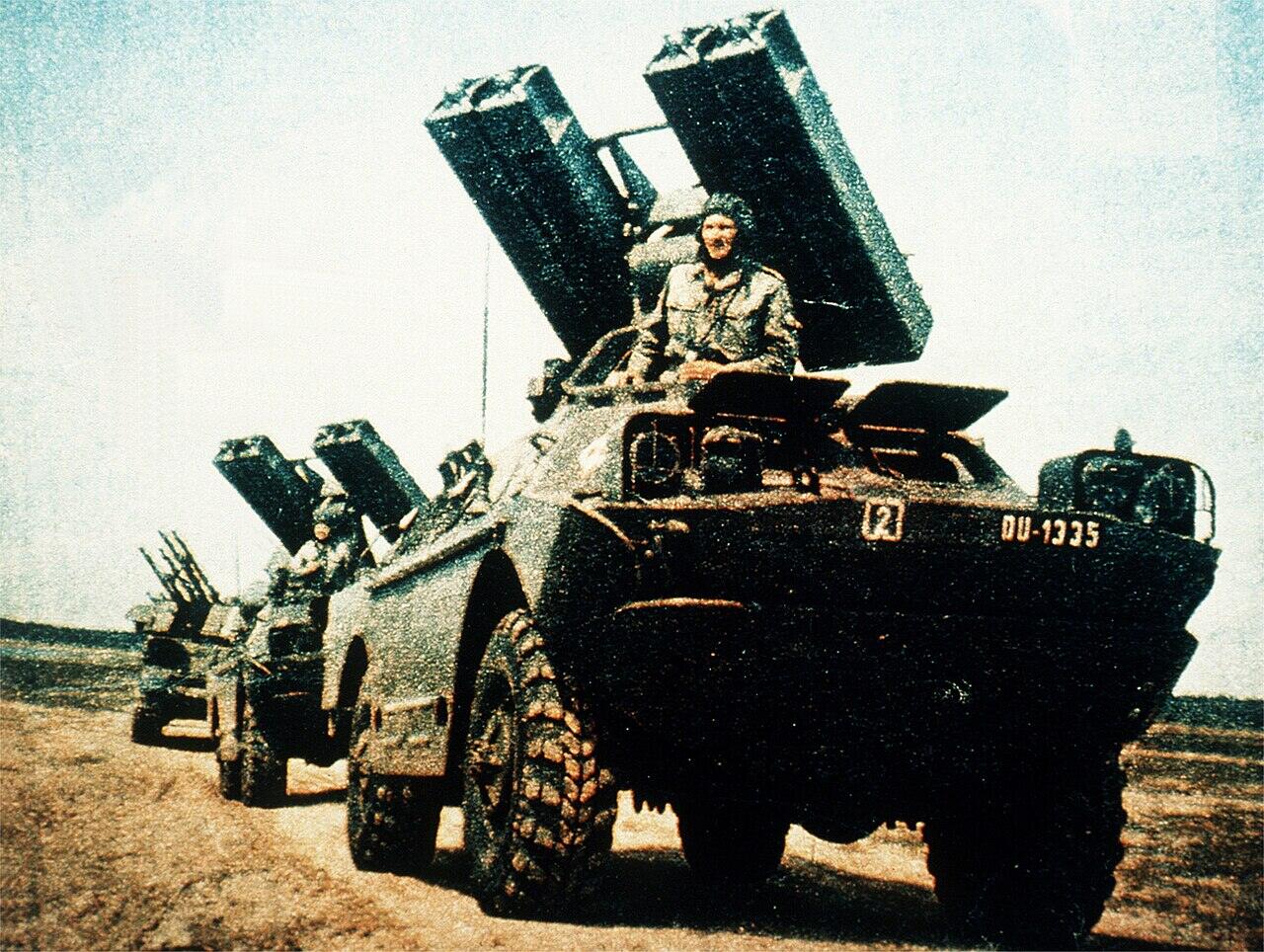

Figure 1 — SA-9 Gaskin engagement limits (side view)
Range 800 m–6.5 km (Western sources) [1]; 6.5 km and a 10 m minimum altitude in the 1998 Army handout [2]. No ceiling in the cited sources. The shaded region combines the published minimum and maximum range, treated as slant range from the launcher, with the minimum and maximum altitude. Real launch zones are smaller and change with target speed, aspect and altitude. Dashed edges mark limits the cited sources do not give. Other SAMs in this section are drawn faintly for comparison, labelled by SA number. Each scale prints its vertical exaggeration.
Overview
The 9K31 Strela-1, NATO reporting name SA-9 Gaskin, is a highly mobile, short-range, low-altitude infrared-guided SAM on a BRDM-2 scout car. The 9M31 missile was accepted after state trials in 1968 and the 9M31M Strela-1M (SA-9B) entered service in 1970. [1]
The vehicle
The BRDM-2’s turret is replaced by four launcher boxes [2] holding four ready-to-fire missiles, and typical tactics fire two at each target. [1] One launcher per platoon carries the 9S16 Flat Box: four passive sensors covering 360° that emit nothing and detect aircraft emissions, to warn the crew and help them find the target optically. [1]
How it engages
The seeker is an uncooled lead sulphide (PbS) detector using photocontrast homing: it tracks the shadow a target makes against the sky’s background radiation. That only works against clear sky or solid overcast, at least 20° from the sun and at least 2° above the horizon. [1] The Army handout lists passive infrared guidance and rear aspect. [2] The missile can engage targets receding at up to 220 m/s or approaching at up to 310 m/s. Its warhead is primarily a direct-hit design with contact and magnetic fuzesFuze GlossaryWeapons: A device that causes the detonation of an explosive charge at the proper time after certain conditions are met. A bomb fuze is mechanical or electrical, and is classed by what sets it off (impact, mechanical time… and a backup optical proximity fuzeProximity fuze GlossaryWeapons: A fuze that detonates before impact when any substantial object is detected at a predetermined distance from it.; the 9M31M raised it from 2.6 to 3 kg. [1]
Envelope
Russian sources give a reliable kill zone of 900 m to 4.2 km for the original 9M31; Western and some Russian sources give 800 m to 6.5 km, and Western claims of up to 8 km for the 9M31M are probably too high. [1] The 1998 Army handout gives 6.5 km and a 10 m minimum engagement altitude. [2] Neither source gives a ceiling, so Figure 1 draws the SA-9’s range along the ground only.
On the radar warning receiver
Nothing. The missile is infrared-guided and the Flat Box only listens, so a radar warning receiver has nothing to detect. Your own emissions, though, are what the Flat Box listens for. [1]
Figure 2 — SA-9 Gaskin on a radar warning receiver
No symbol. The missile homes on infrared and the Flat Box detector is passive, so nothing in the system transmits for a radar warning receiver to detect.
Figure 3 — SA-9 Gaskin unit composition
Schematic symbols for each element, drawn from the composition given in [1] [2]; not vehicle outlines and not to scale.
Sources
- 9K31 Strela-1. Wikipedia (secondary source). https://en.wikipedia.org/wiki/9K31_Strela-1 (accessed 2026-10-25).
- Heavy/Light Opposing Forces Organization and Equipment (student handout, file 4G 3017-6). US Army Aviation Center, Fort Rucker, January 1998. https://man.fas.org/dod-101/sys/land/row/avoac-opfor-sh.htm (accessed 2026-10-25).
Wikipedia articles are secondary sources and can change; they are cited with the date they were read. The Heatblur manual describes the DCS F-14's AN/ALR-67, not every aircraft's radar warning receiver.