
Drafted — not technically validated
Record revision 1 · France's dogfight missile, built to fit Sidewinder launchers and carried by every Mirage from the III to the 2000.
Real-world weapon as described in public sources. Weights and dimensions change with the fins, fuzes and variant fitted; the data plate names the variants its figures describe, and differences are noted beside the number they affect. The record describes the weapon; it is not a guide to employing it.
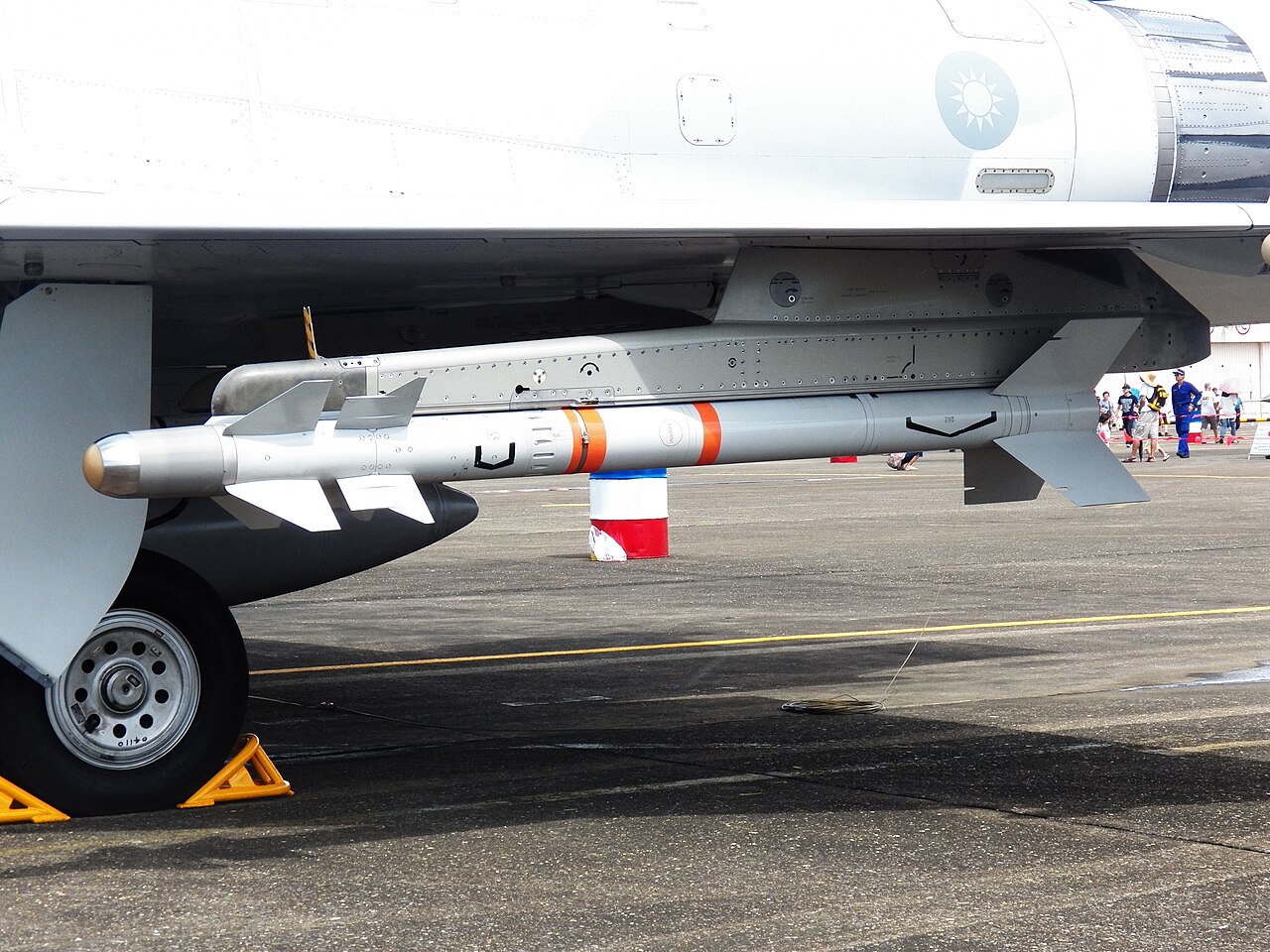
Matra R.550 Magic short-range air-to-air missile · R.550 Magic and Magic 2
- Type
- Short-range infrared-homing air-to-air missile [1]
- Origin
- France; Matra, designed in 1965 [1]
- In service
- Magic from 1968; Magic 2 from 1986 [1]
- Weight
- 89 kg (196 lb) [1]
- Dimensions
- Length 2.72 m; diameter 157 mm; wingspan 0.66 m [1]
- Warhead or payload
- 12.7 kg (28 lb) pre-fragmented high explosive [1]
- Guidance
- Infrared homingHoming GlossaryNavigation: Flying to a station by keeping the bearing pointer at the top of the instrument without correcting for wind. In a crosswind it flies a curved path.Weapons: The technique whereby a mobile station directs itself, or is directed, towards a source of primary or reflected energy, or to a specified point. [1]
- Motor
- Single-stage solid-propellant rocket [1]
- Fuzing
- Contact and radio-frequency proximity fuzingProximity fuze GlossaryWeapons: A fuze that detonates before impact when any substantial object is detected at a predetermined distance from it. [1]
- Range
- About 10 km for the Magic and 20 km for the Magic 2, at best [1]
- Carried by
- Mirage F1Mirage F1 AircraftA swept-wing French fighter sold to eleven countries and flown in many wars. and Mirage 2000Mirage 2000C AircraftFrance's fly-by-wire delta interceptor, armed with Super 530D and Magic II missiles. [1]
- Mirage III and 5, Super Étendard, Sea Harrier FRS.51, Jaguar and some F-16s and MiG-21s [1]
A French Sidewinder rival
Matra designed the R.550 Magic in 1965 to compete with the American SidewinderAIM-9 Sidewinder OrdnanceThe heat-seeking dogfight missile of the US Navy since 1956, copied by the Soviets and still in production as the AIM-9X., as a lighter short-range missileGuided missile GlossaryWeapons: An unmanned vehicle moving above the surface of the Earth whose trajectory or flight path is capable of being altered by an external or internal mechanism. to replace the heavy R.530, and made it fit the Sidewinder’s launch hardware. [1] A Gloster Meteor test aircraft used one to shoot down a target drone in January 1965, and the missile was in mass production from 1967 for the French Air Force and Navy. [1] The Magic 2 replaced it from 1986. [1] Its name is a backronym for Missile Auto-Guidé Interception et Combat. [1]
Combat
On 8 October 1996 a Greek Mirage 2000Mirage 2000C AircraftFrance's fly-by-wire delta interceptor, armed with Super 530D and Magic II missiles. shot down a Turkish F-16DF-16 Fighting Falcon AircraftA single-engine multirole fighter: fly-by-wire, 9 g, and the US Air Force's main strike and SEAD aircraft. over the Aegean with a Magic 2; the Turkish pilot died and the other crew member was rescued. [1]

Sources
- R.550 Magic. Wikipedia (secondary source). https://en.wikipedia.org/wiki/R.550_Magic (accessed 2026-10-27).
Wikipedia articles are secondary sources and can change; they are cited with the date they were read. NAVEDTRA training manuals and budget justification exhibits are official US publications, but each describes the weapons in service when it was written.