
Drafted — not technically validated
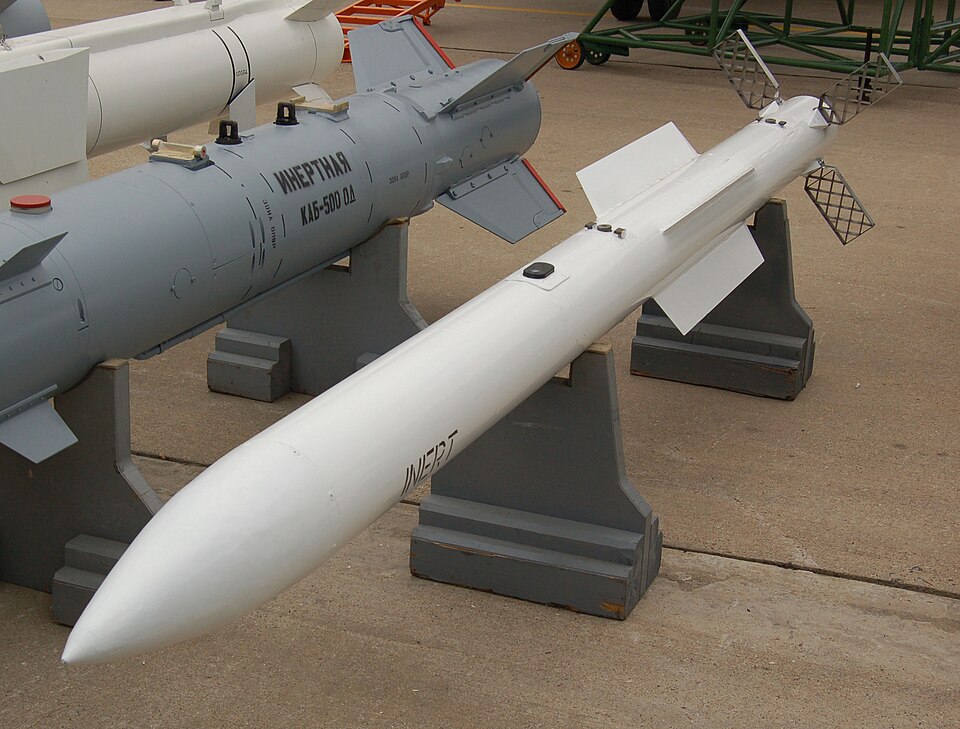
Record revision 1 · Russia's answer to the AMRAAM, an active-radar missile steered by distinctive lattice tail fins.
Real-world weapon as described in public sources. Weights and dimensions change with the fins, fuzes and variant fitted; the data plate names the variants its figures describe, and differences are noted beside the number they affect. The record describes the weapon; it is not a guide to employing it.
Vympel R-77 medium-range air-to-air missile, NATO AA-12 "Adder" · R-77 / RVV-AE, AA-12 Adder
- Type
- Active radar homing, beyond-visual-range air-to-air missile [1]
- Origin
- Soviet Union and Ukraine, then Russia; work began in 1982 [1]
- In service
- Exported as the RVV-AE from the 1990s; the R-77-1 entered Russian service in 2015 [1]
- Weight
- 175 kg (R-77) or 190 kg (R-77-1) [1]
- Dimensions
- Length 3.6 m (R-77) or 3.71 m (R-77-1); diameter 200 mm [1]
- Warhead or payload
- 22.5 kg (50 lb) high-explosive fragmenting warhead [1]
- Guidance
- Inertial mid-course guidance with data-link updates, then active radar homingHoming GlossaryNavigation: Flying to a station by keeping the bearing pointer at the top of the instrument without correcting for wind. In a crosswind it flies a curved path.Weapons: The technique whereby a mobile station directs itself, or is directed, towards a source of primary or reflected energy, or to a specified point. [1]
- Motor
- Solid-fuel rocket [1]
- Fuzing
- Laser proximity fuzeProximity fuze GlossaryWeapons: A fuze that detonates before impact when any substantial object is detected at a predetermined distance from it. [1]
- Range
- About 80 km for the R-77 and RVV-AE, at best launch conditions [1]
- Carried by
- MiG-29MiG-29 Fulcrum AircraftA twin-engine Soviet fighter with a helmet sight and R-73 missiles, built to counter the F-15 and F-16., Su-27Su-27 Flanker AircraftA large, long-range Soviet air superiority fighter with ten missile stations. and the J-11J-11A AircraftChina's licence-assembled Su-27SK, with new displays and the R-77 missile. [1]
- Su-30, Su-35 and Su-57 [1]
The Russian AMRAAM
The R-77 is the Russian counterpart of the AIM-120 AMRAAMAIM-120 AMRAAM OrdnanceThe active-radar "fire and forget" missile that replaced the Sparrow, carried by US fighters of every service since 1991.: an active-radar, fire-and-forget missile. [1] Its development was badly drawn out. Work began in 1982 at the Molniya bureau in Soviet Ukraine and was unfinished when the Soviet Union broke up; for years only the RVV-AE export model was made, and the Russian Aerospace Forces took the R-77-1 into service only in 2015. [1]
Grid fins
For its first forty years the R-77 steered with grid fins, lattice-like tail surfaces. The airflow separation they cause at high angles of attack helps the missile turn, up to 150° per second, but they add drag and radar cross-section, so newer versions return to conventional fins. [1] Its guidance is inertial with data-link updates on the way out and active radar at the end, and a laser proximity fuze sets off the warhead. [1]
Sources
- R-77. Wikipedia (secondary source). https://en.wikipedia.org/wiki/R-77 (accessed 2026-10-27).
Wikipedia articles are secondary sources and can change; they are cited with the date they were read. NAVEDTRA training manuals and budget justification exhibits are official US publications, but each describes the weapons in service when it was written.