
Drafted — not technically validated
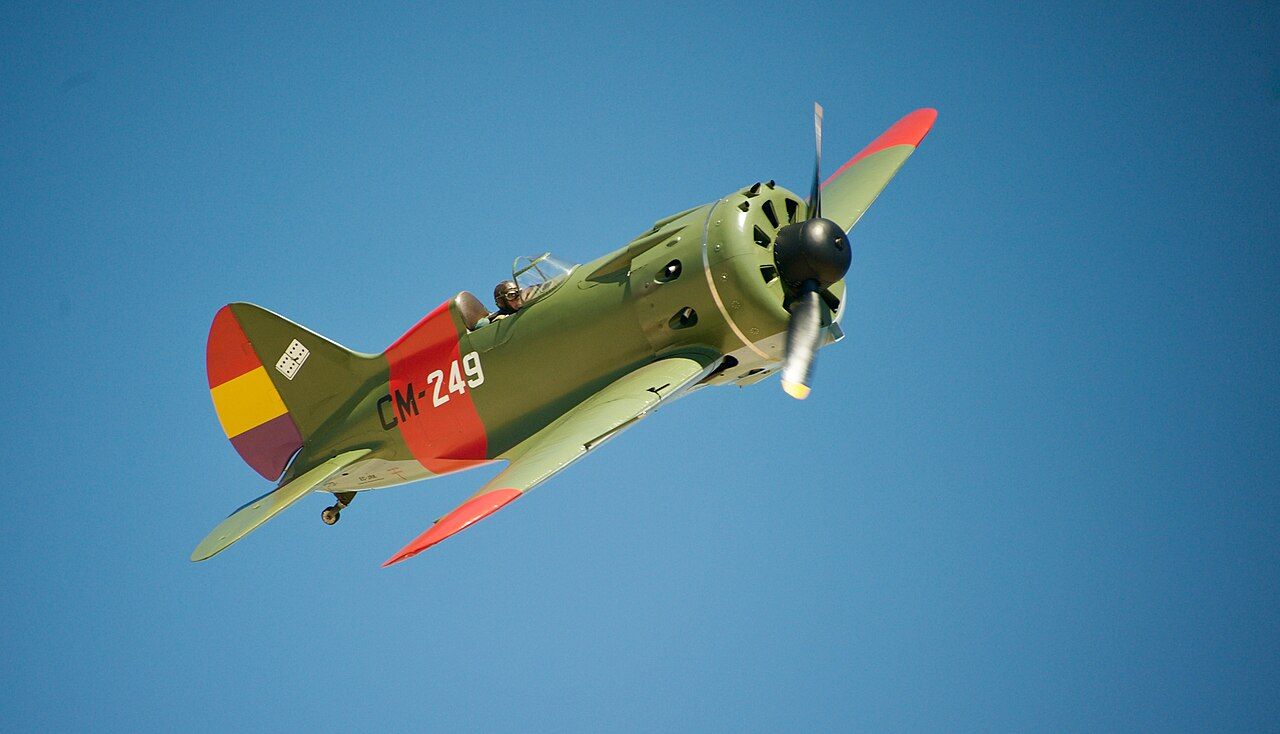
Record revision 1 · The first front-line monoplane fighter with retractable gear, flown in Spain, China, Mongolia and in 1941.
Real-world aircraft as described in public sources. Figures vary between variants, loads and sources; the data plate names the variant its figures describe, and differences are noted beside the number they affect.
I-16 Ishak · Polikarpov I-16 Type 24
- Variant described
- I-16 Type 24 [1]
- Role
- Fighter [1]
- Origin
- Soviet Union
- Manufacturer
- Polikarpov design bureau; built at Factory 21 (Nizhny Novgorod) and Factory 39 (Moscow) [1]
- Crew
- 1 [1]
- First flight
- 30 December 1933 (TsKB-12, flown by Valery Chkalov) [1]
- Entered service
- March 1935 [1]
- Status
- Retired: Soviet Air Force in 1945, Spanish Air Force in 1953 [1]. 10,292 single-seaters built between 1935 and 1942, plus two-seat trainers [1]; several restored to fly in the 1990s [1]
- Powerplant
- One Shvetsov M-63 nine-cylinder radial; the specification gives 1,100 hp and the article text 900 hp [1]
- Maximum speed
- 489 km/h (264 kt) at 3,000 m [1]
- Service ceiling
- 9,700 m (31,800 ft) [1]
- Range
- 700 km (378 NM) with drop tanks [1]
- Armament
- Purchase
- DCS WorldDCS: I-16 by OctopusGDCS Store
Store pages checked 2026-10-28. Prices and availability change.
The first of a new kind
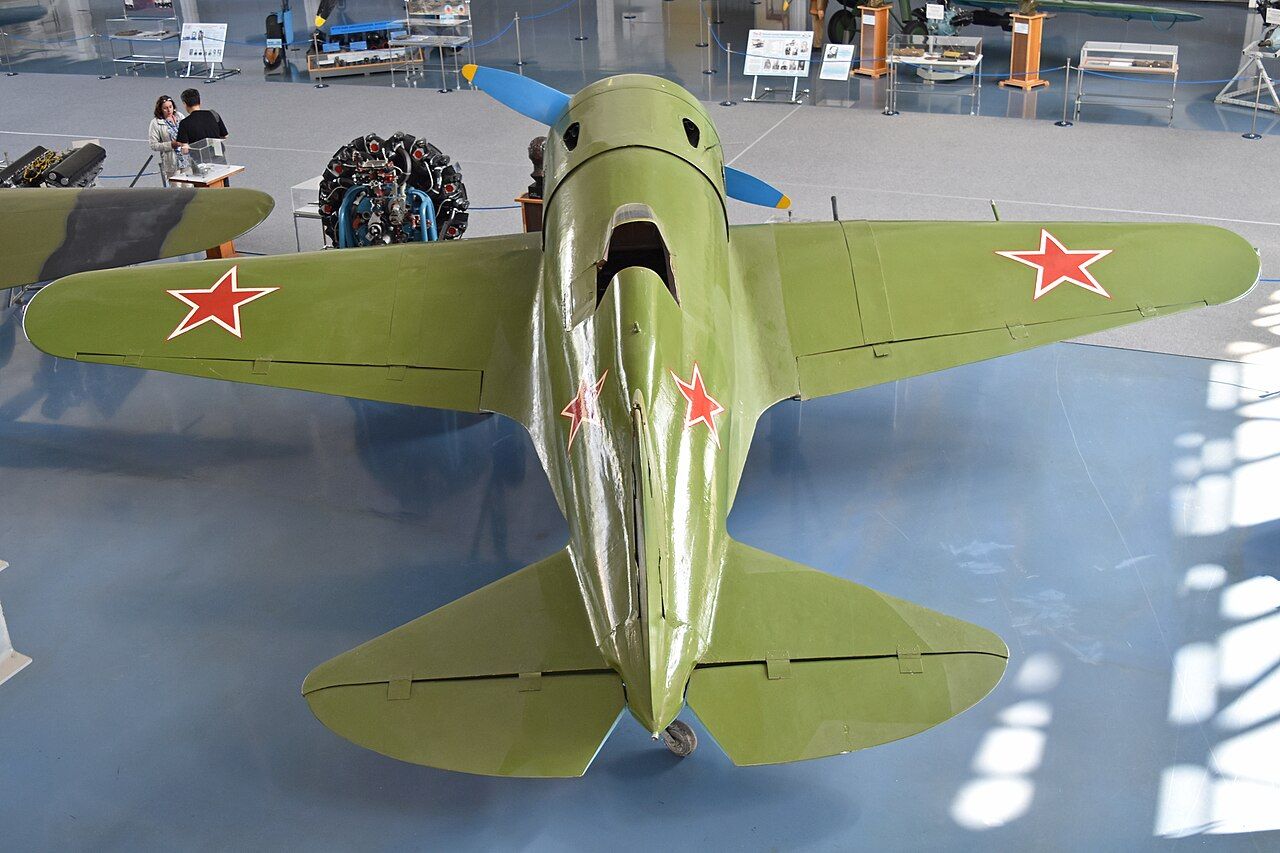
When it appeared in the mid-1930s, the I-16 was the first low-wing monoplane fighter with a retractable undercarriage to reach front-line squadronsSquadron GlossaryJoint terms: 1. An organization consisting of two or more divisions of ships, or two or more divisions (Navy) or flights of aircraft. 2. The basic administrative aviation unit of the Army, Navy, Marine Corps, and Air Force. 3…, and it “introduced a new vogue in fighter design”. [1] Nikolai Polikarpov designed it while still working on biplanes: a tiny, stubby fighter with a radial engine in a streamlined cowling, an enclosed cockpit and wheels that folded away. It was small, light and simple to build, with a wooden fuselage and partly fabric-covered wings. [1] The famous test pilot Valery Chkalov first flew it on 30 December 1933. [1]
It was not easy to fly. The early version was judged so sensitive to abrupt control inputs that aerobatics were forbidden. The pilot had to crank the undercarriage up and down by hand, which took real strength and often jammed, so many test flights were made with the wheels down. [1] In service it rolled faster than 240 degrees a second, but it was unstable in pitch and could not be flown hands-off, and its canopy often fouled with oil or slammed shut in hard manoeuvres, so many pilots locked it open. [1] By the time the Type 5 arrived it was both the lightest and the fastest production fighter in the world. [1]
Donkey, rat, fly and swallow
Soviet pilots called it Ishak, “donkey”, because the word sounds like the Russian pronunciation of “I-16”. In Spain the Republicans who flew it called it the Mosca (“fly”) and the Nationalists who fought it the Rata (“rat”); the Chinese called it Lastochka, “swallow”, and the Finns “flying squirrel”. [1]
Spain, China and Khalkhin Gol
Stalin sent the Spanish Republic hundreds of I-16s in return for gold. On 13 November 1936 twelve of them intercepted a Nationalist bombing raid on Madrid, and the little monoplanes dominated the enemy’s Heinkel and Arado biplanes until the Bf 109Bf 109 K-4 AircraftThe final production version of the most-produced fighter in history, Germany's standard fighter throughout the war. arrived. [1] In China, Chinese aces flew I-16s against Japanese fighters, and in 1939 about 500 fought Japan at Khalkhin Gol on the Mongolian border. [1] There, on 20 August 1939, Captain N. Zvonarev hit a Japanese Ki-27 with an RS-82 rocket fired from about a kilometre away, the first successful use of an air-to-air rocket in combat. [1]
22 June 1941
When Germany invaded the Soviet Union on 22 June 1941, I-16s made up 1,635 of the 4,226 aircraft of the Soviet air force on the frontier. German attacks on their airfields destroyed hundreds in the first 48 hours. [1] In the air the I-16 could turn with a Bf 109E, and skilled pilots who made use of that resisted switching to newer fighters, but the Messerschmitt was faster, climbed better and dived better, and the Germans held the initiative. [1] Around half of all I-16s were still in service in 1943. Some were even carried under the wings of TB-3 bombers as “parasite” dive-bombers, released near the target with two 250 kg bombs. [1]

Sources
- Polikarpov I-16. Wikipedia (secondary source). https://en.wikipedia.org/wiki/Polikarpov_I-16 (accessed 2026-10-25).
Wikipedia articles are secondary sources and can change; they are cited with the date they were read. The Federation of American Scientists (FAS) Military Analysis Network pages largely reproduce US service fact sheets of the late 1990s and early 2000s, so later upgrades are not covered there.