
Drafted — not technically validated
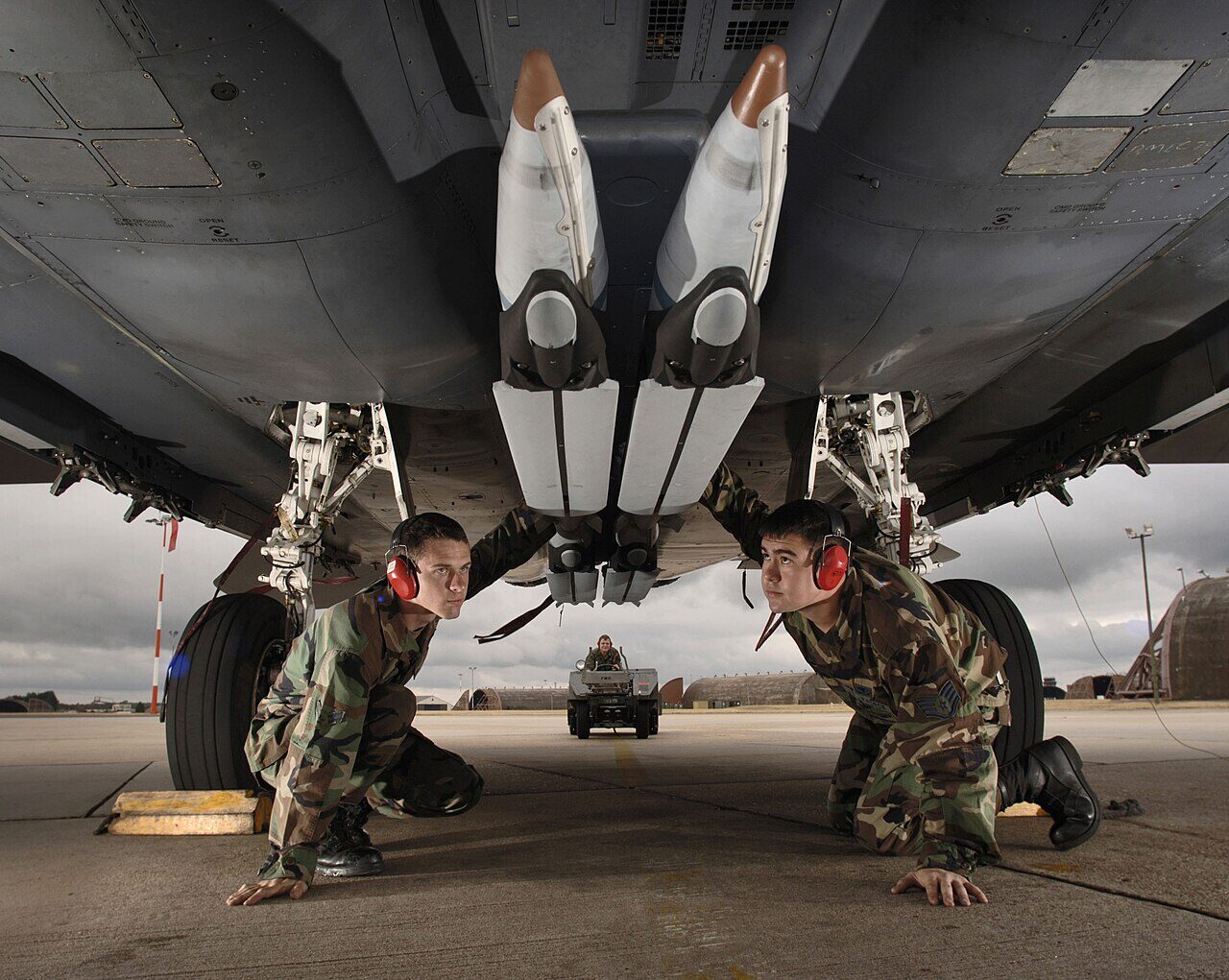
Record revision 1 · A 250 lb class GPS glide bomb carried four to a rack in place of one 2,000 lb bomb.
Real-world weapon as described in public sources. Weights and dimensions change with the fins, fuzes and variant fitted; the data plate names the variants its figures describe, and differences are noted beside the number they affect. The record describes the weapon; it is not a guide to employing it.
GBU-39 Small Diameter Bomb · GBU-39
- Type
- 250 lb class precision-guided glide bomb [1]
- Origin
- United States
- In service
- Delivered to the US Air Force in 2006; first combat use October 2006 [1]
- Weight
- 285 lb (129 kg) [1]
- Dimensions
- Length 70.8 in (1.80 m); width 7.5 in (190 mm) packed, wings 5 ft 3.3 in (1.61 m) extended [1]
- Warhead or payload
- Penetrating blast-fragmentation, about 36 lb of AFX-757; penetrates more than 3 ft of steel-reinforced concrete [1]
- Guidance
- GPS-aided inertial navigation; laser seeker on the GBU-39B/B Laser SDB [1]
- Fuzing
- Electronic safe and fire fuzeFuze GlossaryWeapons: A device that causes the detonation of an explosive charge at the proper time after certain conditions are met. A bomb fuze is mechanical or electrical, and is classed by what sets it off (impact, mechanical time… with cockpit-selectable air burst and delay [1]
- Delivery
- Carried four to a BRU-61/A rack in place of one 2,000 lb bomb; pop-out wings let it glide to its target [1]
- Carried by
Four for one
The Small Diameter Bomb is a small, accurate glide bomb designed so that one aircraft can carry more weapons and strike more targets: most US Air Force aircraft can carry a pack of four on a BRU-61/A rack in place of a single 2,000 lb Mk 84Mark 84 general-purpose bomb OrdnanceThe 2,000 lb heavyweight of the Mark 80 series, dropped by the thousand in Desert Storm and the warhead of the GBU-10 and GBU-31.. [1] It entered service in 2006, reaching initial operational capability on the F-15EF-15E Strike Eagle AircraftThe two-seat, long-range, all-weather strike derivative of the Eagle. in October that year and seeing combat the same month. [1]
Small but sharp
The original SDB uses GPS-aided inertial navigation against fixed targets such as fuel depots and bunkers. [1] Its “DiamondBack” wings deploy after release and stretch its glide. Its small size and accuracy make for an effective weapon with less collateral damage, and its warhead can penetrate more than 3 ft of steel-reinforced concrete. [1] Accuracy can be sharpened before release by differential GPS corrections sent to the aircraft over Link 16 from fixed receivers in theatre. [1]
Sources
- GBU-39 Small Diameter Bomb. Wikipedia (secondary source). https://en.wikipedia.org/wiki/GBU-39_Small_Diameter_Bomb (accessed 2026-10-27).
Wikipedia articles are secondary sources and can change; they are cited with the date they were read. NAVEDTRA training manuals and budget justification exhibits are official US publications, but each describes the weapons in service when it was written.